
-
About Us
Why Choose Us?
Ningbo Kosda New Material Technology Co., Ltd. was established in 2015 and is located in the Ningbo Binhai Economic Development Zone, China, which is the world's largest deep-water port in terms of throughput and a civilized city in China. It is a large modern production enterprise that integrates the design, research and development, production, and sales of paper products. The company adheres to the principle of quality development, advocates green and environmentally friendly products, and promotes the industrialization of high-tech. Starting from meeting customer needs, we provide high-quality and efficient services.
 Modern Green And Environmentally Friendly Paper Product Manufacturer
 -
Products

-
News




 English
 French
 Español
 German

Company News
Napkin Color Range and Warehouse Stock Capacity - Ningbo Kosda
Content
- 1 Ningbo Kosda Confirms Expanded Color Range and Warehouse Stock Capacity for Napkin Orders
- 2 Why Color Range and Warehouse Stock Matter for Napkin Buyers
- 3 Sample Corner: Current Color and Pattern Range
- 4 Warehouse Corner: Stock Readiness for Outbound Orders
- 5 In-Stock vs Made-to-Order: What Buyers Should Compare
- 6 Checklist for Evaluating Napkin Color Range and Stock
- 7 Company Introduction
- 8 Industry Trend: Faster Turnaround for Mixed-Color Napkin Orders
- 9 Frequently Asked Questions
Ningbo Kosda Confirms Expanded Color Range and Warehouse Stock Capacity for Napkin Orders
Ningbo Kosda New Material Technology Co., Ltd. has confirmed that its current napkin sample range now spans more than a dozen solid colors and printed patterns, backed by warehouse stock levels that support both bulk container orders and smaller mixed-color repeat orders. Photos taken on June 11, 2026 show a sample display corner holding lavender, green, orange, and plaid-patterned napkin packs, alongside a separate warehouse section stacked with palletized cartons ready for outbound shipment. For buyers comparing a wholesale napkin supplier, the combination of a wide color range and visible on-hand inventory is one of the more practical indicators of whether a factory can support flexible order sizes without long production lead times. The sections below look at why color range and stock visibility matter, what this specific sample and warehouse snapshot shows, and how buyers can use that information when planning an order.
Why Color Range and Warehouse Stock Matter for Napkin Buyers
Buyers sourcing custom color napkins for hospitality, retail, or event use often need several colors in a single order rather than one solid shade in bulk, which makes a factory's existing color range more relevant than its total production capacity alone. A napkin manufacturer warehouse holding finished stock in common colors can typically confirm a shipping date faster than one that only produces to order, since part of the quantity may already exist on the shelf. This matters most for buyers placing repeat or top-up orders during a season, where a two to three week production wait can mean missing a retail window. Warehouse capacity for wholesale napkin orders also signals that a supplier is used to managing multiple concurrent orders without one large order displacing a smaller buyer's timeline. None of this replaces the need to confirm lead time and minimum order quantity directly with the supplier, but visible stock and color range are a reasonable starting point when narrowing down an OEM color napkin manufacturer shortlist.
Sample Corner: Current Color and Pattern Range
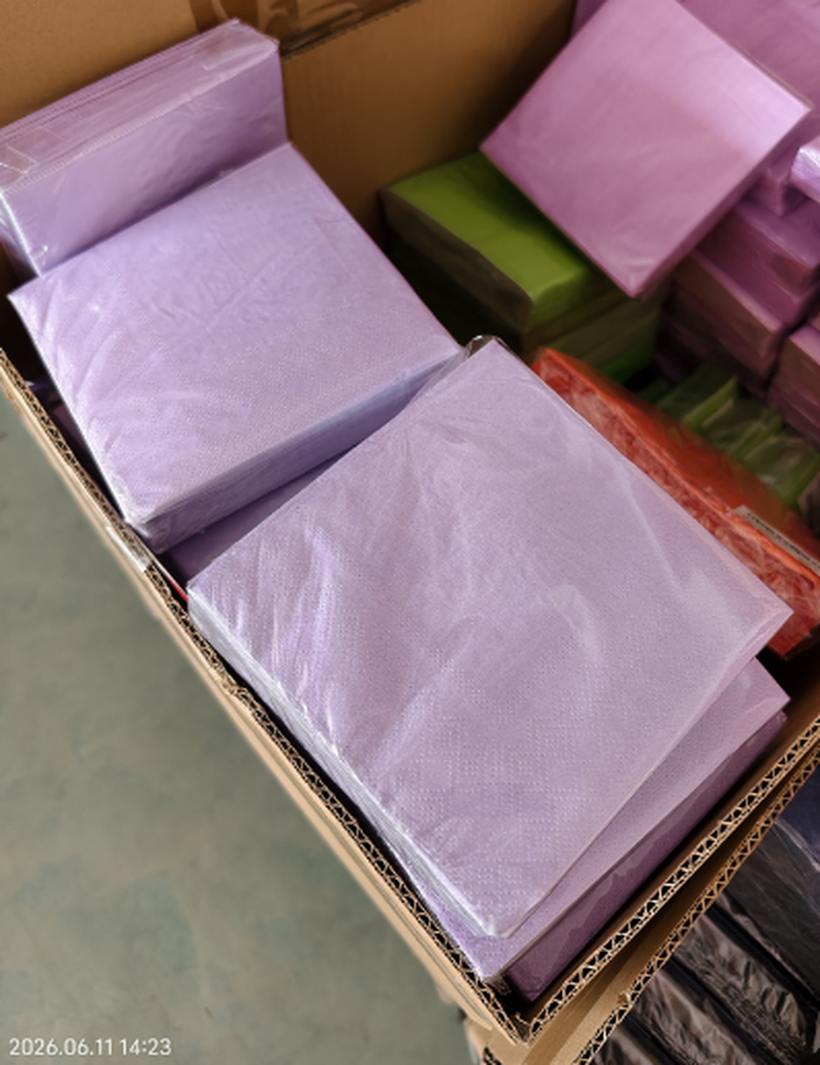
The sample corner photographed on June 11, 2026 includes lavender napkin packs stacked at the front of an open carton, representing one of the more frequently reordered solid colors in the current lineup.
A wider view of the same sample area shows lavender, green, and orange packs alongside a red and green plaid pattern, all stored within reach of each other so a buyer visiting the factory, or reviewing photos remotely, can compare shades side by side.
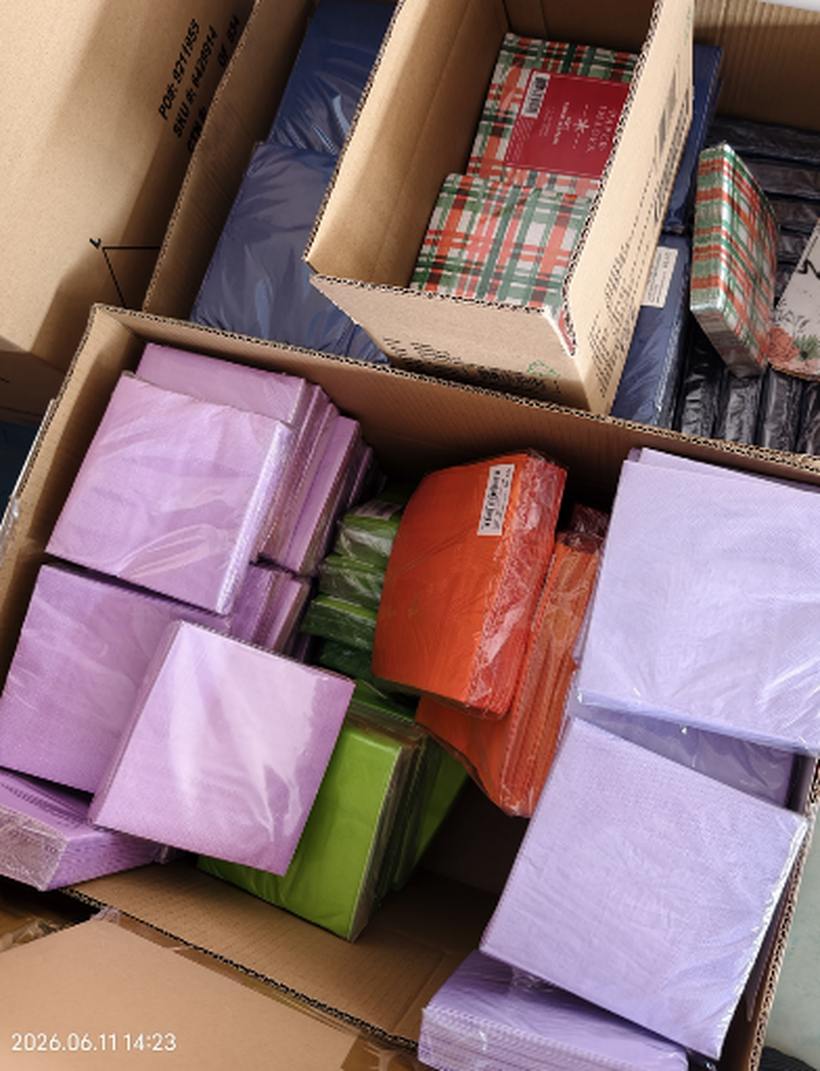
Keeping solid colors and printed patterns in the same sample area is a practical habit for a custom color napkin OEM supplier, since many buyers end up mixing a plain color with one printed pattern in a single seasonal order rather than choosing only one or the other. The plaid pattern shown here is typical of a holiday-season release, while the solid lavender, green, and orange packs are more likely to be reordered year round for everyday hospitality and event use. Having both categories visibly stocked together shortens the sample selection step, which is often one of the slower parts of placing a first order with a new OEM napkin manufacturer.
Warehouse Corner: Stock Readiness for Outbound Orders
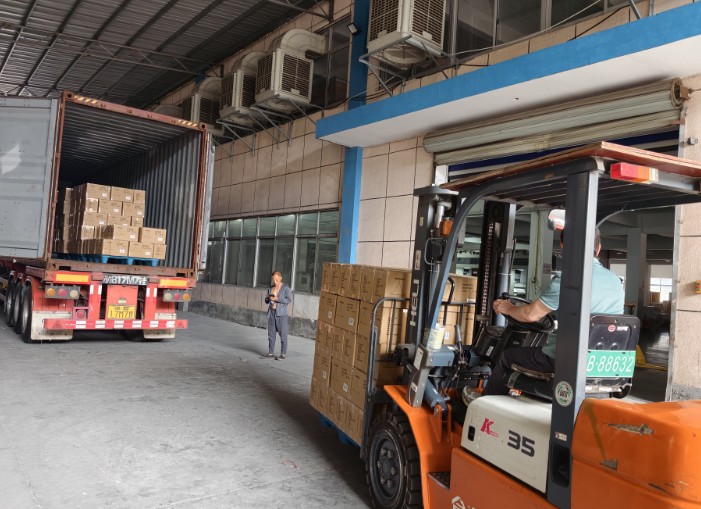
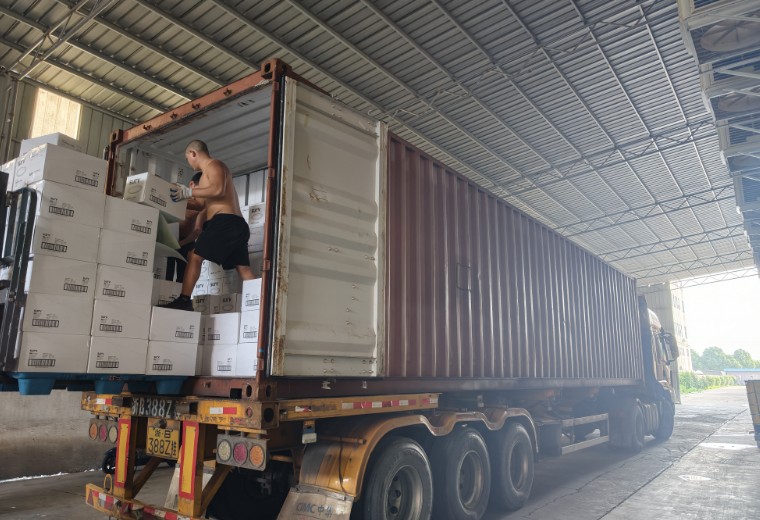
The warehouse photo below shows one section of the finished goods storage area, with palletized cartons arranged in labeled rows and aisles wide enough for pallet truck access.
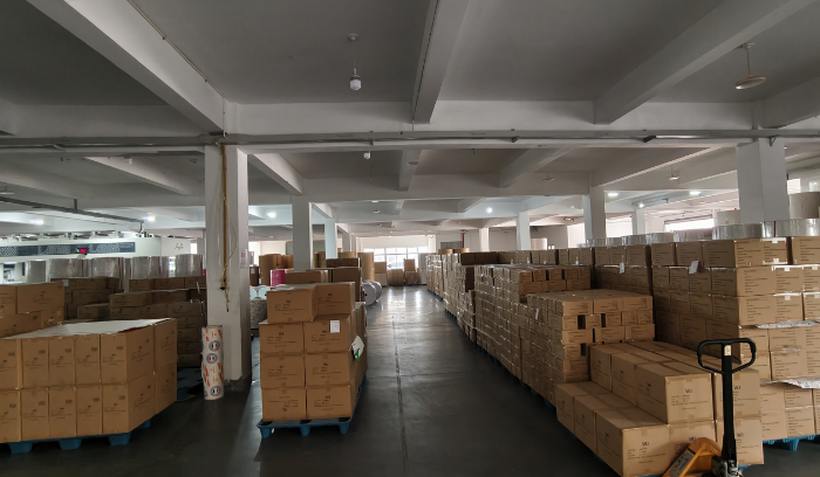
Cartons are grouped by pallet rather than loose-stacked, which makes it easier to pull a specific order for loading without disturbing stock reserved for a different buyer. This kind of layout is common practice among manufacturers handling a mix of standing stock and made-to-order production lines within the same facility, since it keeps ready-to-ship goods physically separated from work-in-progress batches. For buyers, an organized warehouse with visible pallet labeling is a reasonable proxy for order tracking discipline, though it does not by itself confirm exact available quantity for a given color or pattern at the time of inquiry.
In-Stock vs Made-to-Order: What Buyers Should Compare
The chart below is a general illustration of how lead time typically differs between an in-stock color and a made-to-order custom color or pattern, based on common practice in the printed tissue paper category rather than a fixed guarantee.
Reordering a color that is already in production or held in warehouse stock is generally the fastest path, since it skips color matching, plate setup, and initial run approval. Matching a new solid color against a buyer's reference sample typically adds time for dye matching and a small trial run before full production starts. A fully custom printed pattern takes the longest because it usually requires new plate or cylinder engraving in addition to color and print registration approval. These ranges are general industry patterns rather than a fixed timeline for any single supplier, so buyers should still confirm current lead time directly for their specific color, pattern, and order quantity before finalizing a shipping schedule.
Checklist for Evaluating Napkin Color Range and Stock
- Ask which specific colors are currently held as finished stock versus produced to order
- Confirm minimum order quantity for in-stock colors, which is often lower than for a new custom color
- Request updated sample photos or a physical swatch card rather than relying on older catalog images
- Clarify whether mixed-color cartons within one shipment are supported without a surcharge
- Verify warehouse-to-port shipping distance, since this affects total transit time alongside production lead time
Company Introduction
Ningbo Kosda New Material Technology Co., Ltd. is a China OEM/ODM catering packaging manufacturer and sustainable food packaging supplier established in 2015 and located in the Ningbo Binhai Economic Development Zone, home to one of the world's largest deep-water ports by throughput. The company operates as a large modern production enterprise that integrates design, research and development, production, and sales of paper products. Kosda's approach is built around quality-focused development and a preference for green, environmentally friendly materials, alongside continued investment in higher-technology production methods. Starting from a clear understanding of customer needs, the company aims to provide efficient, dependable service across its napkin and broader catering packaging product lines, including the color range and warehouse stock practices described above.
Industry Trend: Faster Turnaround for Mixed-Color Napkin Orders
Hospitality and event buyers have been moving toward smaller, more frequent napkin orders in mixed colors rather than a single large order in one shade, partly to match shorter seasonal promotion cycles and reduce unsold inventory risk on their own side. This shift places more value on a napkin manufacturer warehouse that already holds common colors in stock, since it lets buyers place a smaller top-up order without waiting through a full production cycle each time. It also means color range breadth is becoming a more visible factor in supplier selection, alongside more traditional criteria like paper weight and print quality. Manufacturers responding to this trend tend to keep a rotating set of popular colors and one or two seasonal patterns in standing stock, updating the mix based on which colors are reordered most often. Buyers evaluating a bulk color napkin stock availability question should expect this mix to shift gradually across the year rather than staying fixed.
Frequently Asked Questions
Q1: Does having warehouse stock always mean faster shipping?
Generally yes for the specific colors held in stock, but buyers should still confirm current available quantity, since stock levels for any single color can change between inquiries.
Q2: Can a napkin order combine multiple colors in one shipment?
Most manufacturers can combine colors within one order, though this is worth confirming in advance since minimum quantity per color may differ from a single-color order.
Q3: How long does a brand new custom color usually take to set up?
A new color match generally takes longer than reordering an in-stock color, since it involves dye matching and a trial run before full production, though the exact timeline depends on the supplier and order size.
Q4: Is a printed pattern napkin harder to produce than a solid color?
Printed patterns typically take longer to set up than a solid color because they require plate or cylinder engraving and print registration checks in addition to standard color approval.
Your email address will not be published. Required fields are marked *
-
Modern Green And Environmentally Friendly Paper Product Manufacturer
-
Quick Links
Home About Us Products News Contact Us -
Product Categories
Paper Plates Paper Cup Paper Napkin Paper Food Container Disposable Paper Tablecloth Wrapping Paper Roll Paper Cutlery -
Contact Us
 Tel: +86-13967818265
0086-13646629749 E-mail: [email protected]
E-mail: [email protected]
E-mail: [email protected]
E-mail: [email protected]
 Whatsapp: 008613646629749
 Add: 1036 Cidong Avenue, Binhai Economic Development Zone, Ningbo City, Zhejiang Province, China
