
-
About Us
Why Choose Us?
Ningbo Kosda New Material Technology Co., Ltd. was established in 2015 and is located in the Ningbo Binhai Economic Development Zone, China, which is the world's largest deep-water port in terms of throughput and a civilized city in China. It is a large modern production enterprise that integrates the design, research and development, production, and sales of paper products. The company adheres to the principle of quality development, advocates green and environmentally friendly products, and promotes the industrialization of high-tech. Starting from meeting customer needs, we provide high-quality and efficient services.
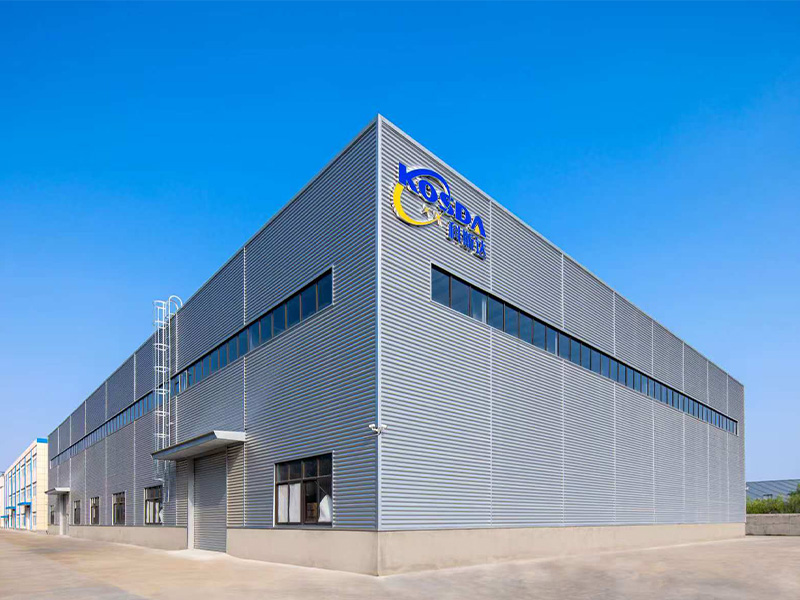 Modern Green And Environmentally Friendly Paper Product Manufacturer
 -
Products

-
News




 English
 French
 Español
 German

Company News
What Is Sustainable Food Packaging? A Buyer's Guide
Sustainable food packaging refers to packaging made from renewable, biodegradable, or compostable materials, most commonly molded pulp, kraft paper, and coated paperboard, designed to replace single-use plastic in catering, foodservice, and takeaway applications while reducing long-term environmental impact. For catering businesses and foodservice brands evaluating a switch away from conventional plastic containers, the practical starting point is understanding which paper-based material fits a given food type, since grease resistance, moisture barrier needs, and stacking behavior vary significantly across product categories. The sections below walk through material differences, environmental comparisons, demand trends, and what to check when selecting an OEM Catering Packaging Manufacturer or Sustainable Food Packaging Supplier.
Content
- 1 What Materials Make Up Sustainable Food Packaging?
- 2 Sustainable Food Packaging vs Traditional Plastic Packaging
- 3 Growing Demand for Eco-Friendly Catering Packaging
- 4 Container Loading and Export Efficiency
- 5 Understanding Molded Pulp Container Construction
- 6 How to Select an OEM Sustainable Food Packaging Supplier
- 7 About Ningbo Kosda New Material Technology Co., Ltd.
- 8 Frequently Asked Questions
What Materials Make Up Sustainable Food Packaging?
Most sustainable food packaging product lines are built around a small set of paper-based materials, each suited to different food contact requirements. Molded pulp, produced from recycled or virgin fiber pressed into shape, is widely used for trays, clamshells, and takeaway boxes because it holds structural form while remaining compostable. Kraft paper is favored for wraps, bags, and cup stock due to its strength-to-weight ratio and printability. Coated paperboard, which uses a thin functional coating to improve moisture and grease resistance, is common in cup and container applications where the packaging must hold liquids or oily food for a limited service period.
Common Material Types and Their Role
| Material | Key Characteristic | Common Use |
|---|---|---|
| Molded Pulp | Rigid, compostable structure | Trays, clamshells, takeaway boxes |
| Kraft Paper | High strength-to-weight, printable | Wraps, bags, cup stock |
| Coated Paperboard | Moisture and grease resistance | Cups, liquid-holding containers |
| Bio-Based Film Lining | Added barrier for wet or oily food | Hot food containers, soup bowls |
This donut chart shows an illustrative material mix typically found across a general-purpose sustainable food packaging product range rather than a fixed industry-wide statistic. Molded pulp usually accounts for the largest share because it serves the broadest range of rigid container formats, from trays to clamshells. Kraft paper follows closely, since it is used across wraps, bags, and cup base stock, which together cover a wide variety of catering formats. Coated paperboard occupies a moderate share, concentrated mainly in cup and liquid-holding applications where an added moisture barrier is required. Bio-based film lining represents the smallest segment, reserved for products handling wetter or oilier food where a standard paper surface alone would not hold up during the service period. Buyers should confirm the exact material specification for any specific product line rather than assuming this general split applies uniformly across all catalog items.
Sustainable Food Packaging vs Traditional Plastic Packaging
A direct comparison between paper-based eco-friendly food packaging and conventional plastic packaging shows that each material category has a different performance profile rather than one being universally superior across every attribute. Paper-based packaging generally performs better on biodegradability and compostability, while conventional plastic can offer stronger baseline grease resistance without additional coating. The radar chart below illustrates this trade-off across five commonly referenced attributes.
This radar chart presents an illustrative, relative comparison rather than certified laboratory test results for any specific product pair. Paper-based packaging extends noticeably further on biodegradability and compostability, which is consistent with its fiber-based composition and its ability to break down under industrial or home composting conditions depending on the specific material grade. Conventional plastic shows a slight advantage on baseline grease resistance without added coating, since plastic film naturally repels oil and moisture without further treatment. Recyclability is shown as moderately favoring paper-based packaging in regions with established paper recycling infrastructure, though actual recyclability always depends on local waste collection and processing systems. Material efficiency is shown as broadly comparable between the two categories, since both can be engineered for lightweight use depending on product design. Foodservice buyers comparing these two categories should weigh this profile against their specific food type, since a wetter or oilier menu item may require additional coating or lining regardless of the base material chosen.
Growing Demand for Eco-Friendly Catering Packaging
Demand for biodegradable food packaging has generally trended upward as foodservice brands respond to tightening regulation on single-use plastic items, including measures such as the European Union's restrictions on certain single-use plastic products and similar plastic-reduction policies introduced in other markets. This regulatory direction, combined with growing consumer preference for compostable takeaway options, has pushed many catering operators to review their packaging specifications and request custom food packaging solutions that align with these requirements.
This area chart presents an illustrative, generally upward trend in demand for eco-friendly catering packaging rather than a specific measured dataset from any single market. The steady slope reflects a gradual shift in foodservice procurement rather than a sudden spike, consistent with how packaging specification changes are typically phased in alongside menu planning and supplier transition schedules. This direction is broadly consistent with public reporting on plastic-reduction policy adoption across multiple regions, which has repeatedly identified foodservice and catering packaging as a priority category for regulatory attention. As more OEM Catering Packaging Manufacturer partners expand their compostable product ranges, catering businesses gain more practical options for aligning their packaging with these evolving requirements without needing to redesign their entire operation at once. The consistent upward direction also suggests this shift is structural rather than a short-term trend tied to a single regulatory announcement.
Container Loading and Export Efficiency
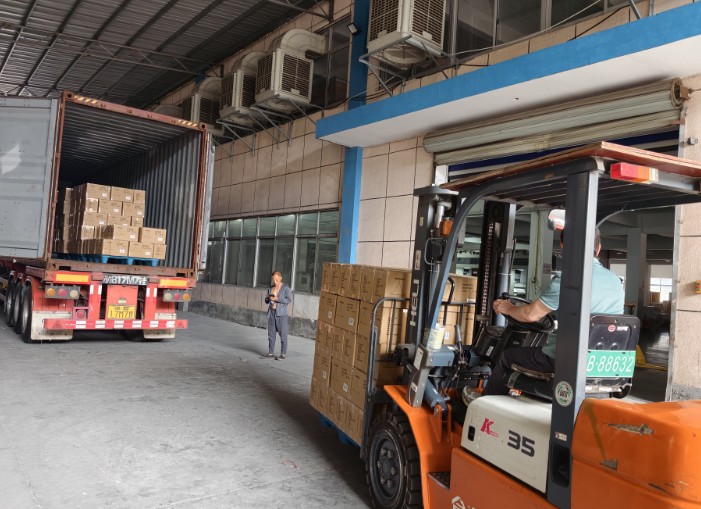
Packaging format also affects how efficiently finished goods can be consolidated and loaded for export, which matters for catering businesses sourcing from an overseas China Food Packaging Manufacturer. Flat-packed and nested product formats generally use container space more efficiently than pre-assembled items, since they reduce the amount of empty air space carried inside each shipping unit. The photograph below shows a real container loading operation, illustrating how palletized cartons are organized and loaded for export shipment.
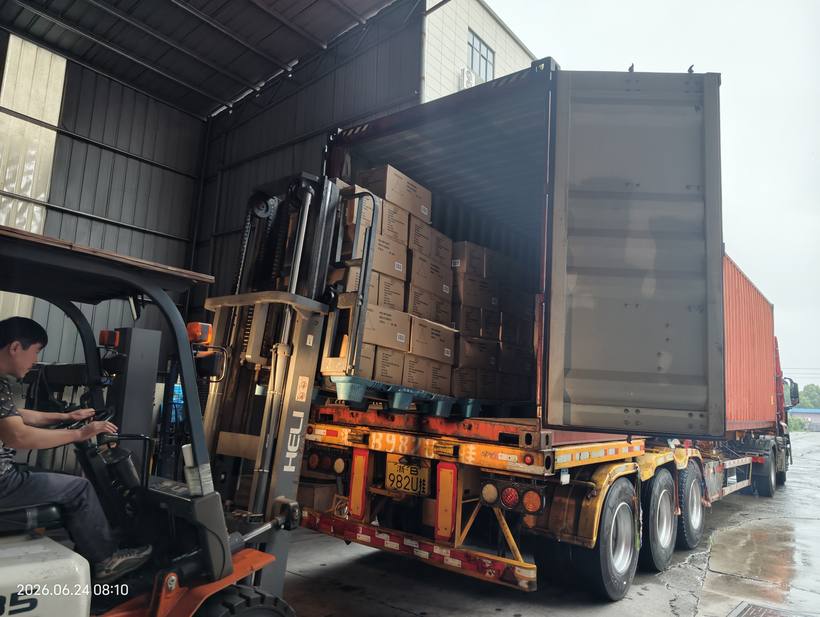
This horizontal bar chart shows an illustrative, relative comparison of container space efficiency across common packaging formats rather than measured logistics data for a specific shipment. Flat-packed kraft boxes generally achieve the highest relative efficiency because they collapse into thin, stackable layers before assembly, reducing wasted volume during transport. Nested paper cups perform similarly well, since cup stacks are designed to interlock tightly within a carton. Stackable molded pulp trays sit in the middle range, as their rigid shape limits nesting compared with flat or cup-based formats, though they still stack more efficiently than fully assembled containers. Assembled clamshells generally show the lowest relative efficiency because their hinged, three-dimensional shape carries more empty air space per unit, which is why many buyers request flat-packed or partially assembled formats specifically to improve loading efficiency for export shipment. This type of comparison is useful when planning order quantities and container bookings with a Sustainable Food Packaging Supplier, since format choice directly affects how many finished units fit into a single export shipment.
Understanding Molded Pulp Container Construction
A molded pulp container is generally built from several functional zones working together, and understanding this construction helps buyers evaluate whether a given design fits their food type. The isometric diagram below labels the main structural elements found in a typical compostable food container.
This isometric diagram illustrates the general structural zones found in a typical molded pulp food container rather than a technical drawing of a single certified product model. The ventilated lid zone allows steam to escape from hot food, which helps reduce condensation buildup during transport and short-term storage. The fiber-based body forms the main load-bearing structure, generally produced through a pulp molding process that presses recycled or virgin fiber into the target shape before drying. An optional grease-resistant coating can be applied to the interior surface for food types with higher oil or moisture content, while products intended for dry food may omit this layer entirely. The stackable base rim is designed to nest with matching units, supporting the container loading efficiency discussed in the previous section. Buyers requesting a custom food packaging solutions project should specify which of these zones need adjustment for their particular menu items, since coating requirements and wall thickness both affect unit cost and compostability rating.
How to Select an OEM Sustainable Food Packaging Supplier
Selecting a Sustainable Food Packaging Supplier for an OEM or ODM program involves reviewing more than material type, since production capability, design support, and export experience all affect how smoothly a custom packaging project runs. The checklist below summarizes practical points to review before finalizing a supplier for a catering packaging program.
- Confirm in-house design and mold development capability for custom container shapes.
- Ask which coating or lining options are available for wet, oily, or hot food applications.
- Review compostability documentation for the specific material grade being ordered.
- Discuss packaging format, such as flat-packed versus assembled, to plan container loading efficiency.
- Confirm export documentation experience for shipment to your destination market.
Working through this checklist before placing an order helps avoid mismatches between the finished packaging and the specific food application it needs to support, which is a common source of delay when catering businesses switch suppliers.
About Ningbo Kosda New Material Technology Co., Ltd.
Ningbo Kosda New Material Technology Co., Ltd. is a China OEM/ODM Catering Packaging Manufacturer and Sustainable Food Packaging Supplier, established in 2015 and located in the Ningbo Binhai Economic Development Zone, near the Ningbo-Zhoushan Port, which the company notes as one of the world's busiest deep-water ports by cargo throughput. The company is a large modern production enterprise that integrates the design, research and development, production, and sales of paper products under a single operation.
Ningbo Kosda follows a quality-focused development approach, advocates green and environmentally friendly products, and supports the industrialization of high-tech production methods within its paper product lines. Starting from customer requirements, the company works to provide efficient service for catering businesses seeking a China Food Packaging Manufacturer capable of supporting custom molded pulp, kraft paper, and coated paperboard product development for export markets.
Frequently Asked Questions
Q1: What makes food packaging count as sustainable?
Sustainable food packaging is generally made from renewable, biodegradable, or compostable materials such as molded pulp or kraft paper rather than conventional plastic.
Q2: Can biodegradable food packaging hold hot or oily food?
Many molded pulp and paperboard products can be finished with a grease-resistant coating or bio-based film lining for wetter or oilier food, depending on the product specification.
Q3: What should I check before choosing an OEM catering packaging manufacturer?
Review design and mold development capability, coating options, compostability documentation, and export experience before finalizing a supplier.
Q4: Does packaging format affect export shipping efficiency?
Yes, flat-packed and nested formats generally use container space more efficiently than fully assembled containers, which affects how many units fit into a single shipment.
Your email address will not be published. Required fields are marked *
-
Modern Green And Environmentally Friendly Paper Product Manufacturer
-
Quick Links
Home About Us Products News Contact Us -
Product Categories
Paper Plates Paper Cup Paper Napkin Paper Food Container Disposable Paper Tablecloth Wrapping Paper Roll Paper Cutlery -
Contact Us
 Tel: +86-13967818265
0086-13646629749 E-mail: [email protected]
E-mail: [email protected]
E-mail: [email protected]
E-mail: [email protected]
 Whatsapp: 008613646629749
 Add: 1036 Cidong Avenue, Binhai Economic Development Zone, Ningbo City, Zhejiang Province, China
