
-
About Us
Why Choose Us?
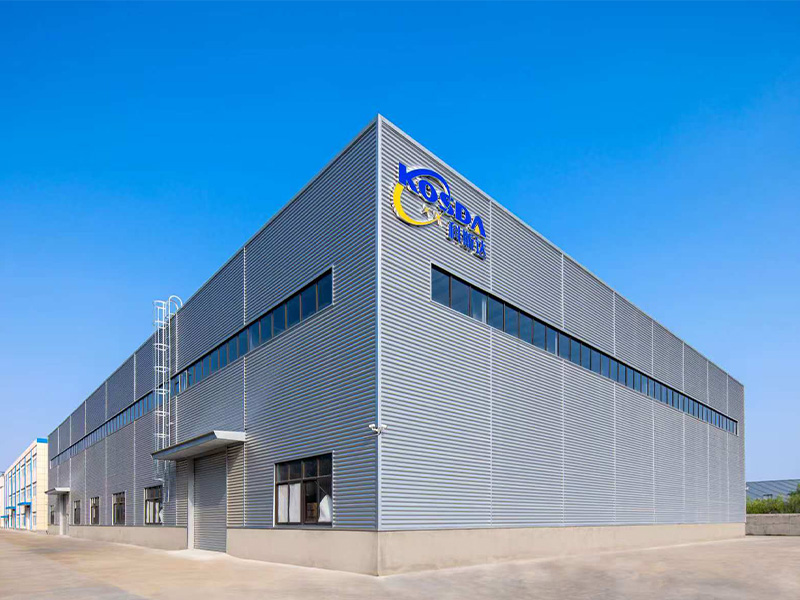
Ningbo Kosda New Material Technology Co., Ltd. was established in 2015 and is located in the Ningbo Binhai Economic Development Zone, China, which is the world's largest deep-water port in terms of throughput and a civilized city in China. It is a large modern production enterprise that integrates the design, research and development, production, and sales of paper products. The company adheres to the principle of quality development, advocates green and environmentally friendly products, and promotes the industrialization of high-tech. Starting from meeting customer needs, we provide high-quality and efficient services.
 Modern Green And Environmentally Friendly Paper Product Manufacturer
 -
Products

-
News




 English
 French
 Español
 German

Industry News
Sustainable Paper Packaging Guide for Restaurant Food Containers
Sustainable paper packaging made from pulp based materials offers restaurants and catering operators a practical way to serve food while reducing dependence on plastic. Recyclable disposable meal containers, paper plates, paper cups, paper bowls, paper napkins, and paper food containers can be produced from wood pulp, bamboo pulp, or bagasse fiber, and when coated correctly with a food grade barrier layer they hold liquids, oils, and hot food for typical serving durations without leaking. This article explains how different paper packaging formats are constructed, which format suits which food service scenario, how coating type affects performance, and what to check when sourcing restaurant food container products from a manufacturing partner.
Content
- 1 What Makes Paper Packaging Suitable For Food Service
- 2 Coating Types And Their Role In Performance
- 3 Paper Cups And Paper Bowls For Beverage And Food Service
- 4 Choosing Between Round Square And Oval Plate Formats
- 5 Durability Behavior Under Sustained Food Contact
- 6 Matching Format To Food Category
- 7 Comparing Kraft And White Coated Lines Side By Side
- 8 Recyclability Performance Of Paper Based Packaging
- 9 Paper Napkins Wrapping Paper And Tablecloth Options
- 10 Sourcing Considerations For Restaurant Food Container Programs
- 11 Inside A Coated Paper Container: Structural Overview
- 12 Industry Direction For Sustainable Paper Packaging
- 13 About Ningbo Kosda New Material Technology Co., Ltd.
- 14 Frequently Asked Questions
- 14.1 What is the difference between white coated and kraft paper products
- 14.2 Are paper plates and paper cups suitable for hot food and beverages
- 14.3 Can paper food containers be used for both dry and wet food
- 14.4 How does recyclability work for coated paper packaging
- 14.5 What products complement paper plates and containers in a full restaurant program
- 14.6 Why do restaurants choose lace edged or oval plate formats
What Makes Paper Packaging Suitable For Food Service
Paper packaging intended for food contact is built from a base paperboard layer combined with a functional coating that controls moisture resistance and grease resistance. Without this coating, plain paper absorbs liquid quickly and loses structural strength within minutes, which is why uncoated paper is rarely used directly for wet or hot food. Coated paper plates, coated paper cups, and coated paper food containers rely on a thin polymer or water based barrier film applied to one or both sides of the sheet before the product is die cut and formed.
The base paperboard itself typically falls into two visual categories relevant to restaurant food container selection: white coated stock, which presents a clean neutral appearance suited to formal catering, and kraft paper stock, which retains its natural brown fiber tone and is commonly associated with a rustic or eco forward presentation. Both categories can achieve comparable functional performance once coated correctly, and the choice between white coated paper cup and kraft paper cup formats, for example, is largely a presentation and branding decision rather than a performance difference.
| Common paper plate formats used across restaurant food service settings | ||
| Paper Format | Base Material | Common Use Case |
| Round paper plate | Coated paperboard | General meal service |
| Lace edged paper plate | Coated paperboard | Catering and events |
| Square paper plate | Coated paperboard | Modern presentation dining |
| Oval plate | Coated paperboard | Extended food items, sandwiches |
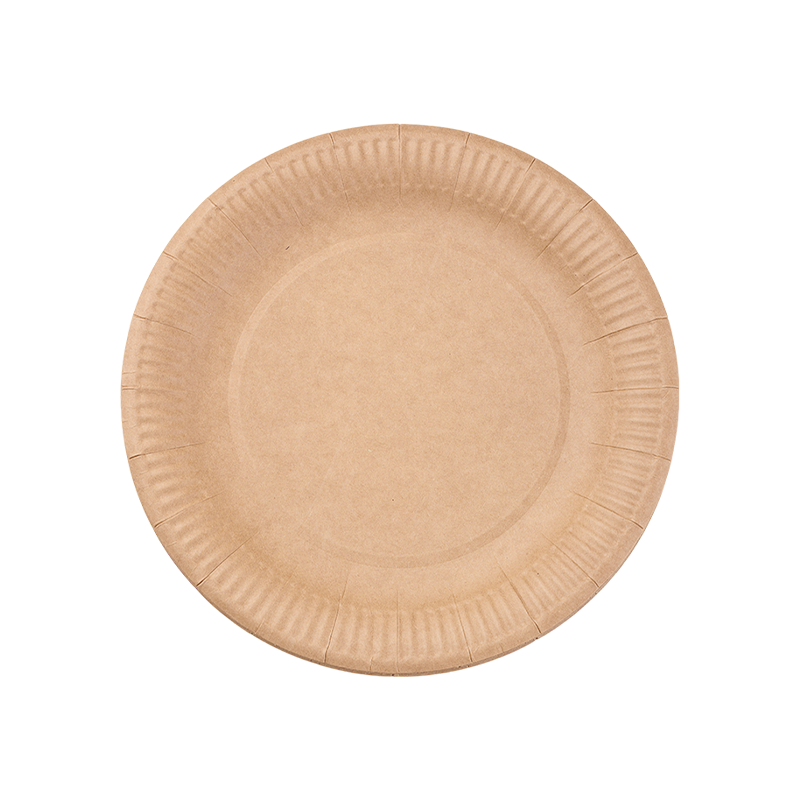
| Kraft paper plate | Kraft paperboard | Casual and eco style service |
| Kraft paper oval plate | Kraft paperboard | Bakery and deli presentation |
Coating Types And Their Role In Performance
Coating choice determines how a recyclable disposable meal container performs under heat, moisture, and oil exposure. Two coating families dominate current paper packaging production, and understanding their difference helps buyers match a container to its intended food type.
Paper Cups And Paper Bowls For Beverage And Food Service
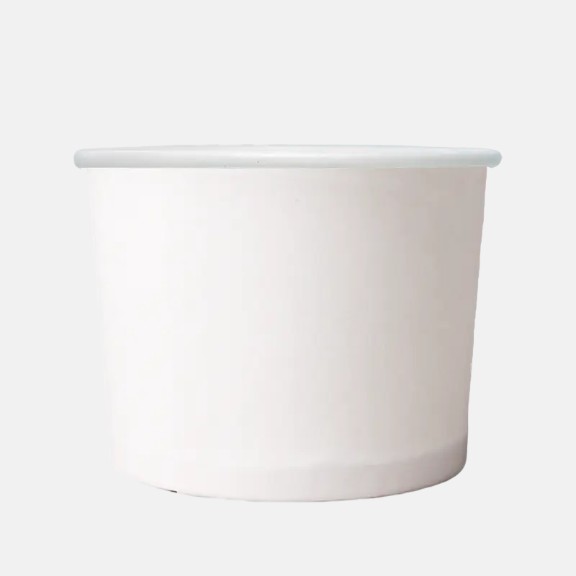
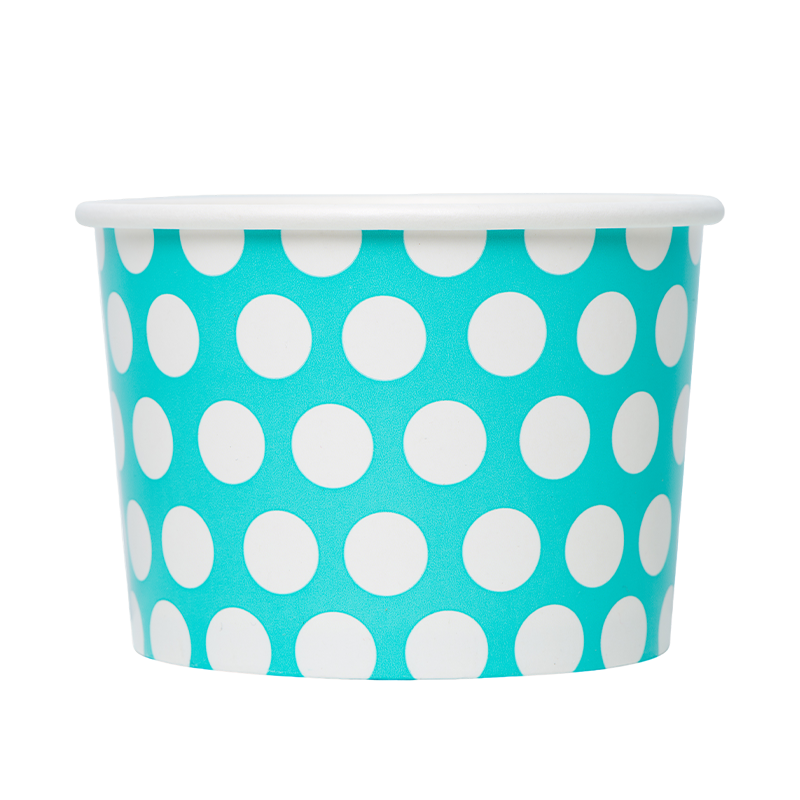
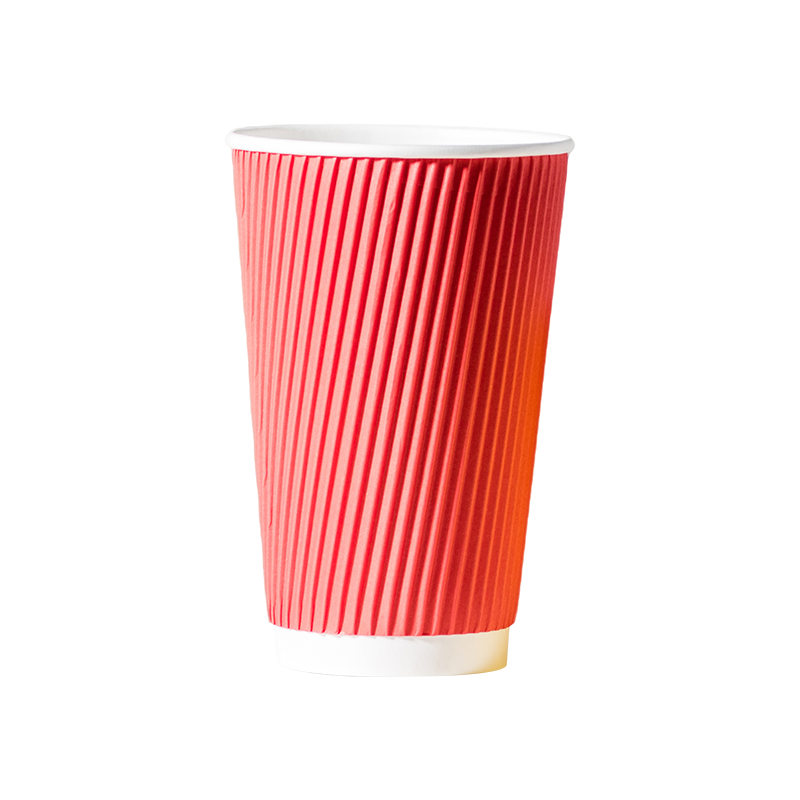
Paper cup formats generally split into white coated paper cup and kraft paper cup categories, both constructed with an inner coating layer to hold hot or cold beverages without leaking through the sidewall or base seam. Paper bowl formats follow a similar construction logic, with white coated paper bowl and kraft paper bowl variants suited to soups, noodles, salads, and other bowl style food presentations common in restaurant and takeaway settings.
This donut chart illustrates a general distribution of paper cup and bowl format usage across restaurant and beverage service settings based on common industry ordering patterns. White coated paper cups typically represent the largest single segment because their neutral appearance suits a wide range of cold and hot beverage applications from coffee shops to casual dining. Kraft paper cups form a meaningful secondary segment, often selected for their natural fiber appearance in cafes and bakery settings that favor an eco forward visual identity. White coated paper bowls occupy a solid share tied closely to noodle, soup, and rice bowl service where liquid containment matters most. Kraft paper bowls complete the picture as a smaller but steady category, frequently paired with salad and grain bowl presentations. This distribution helps explain why a restaurant food container supplier typically maintains parallel white coated and kraft paper production lines rather than committing exclusively to one visual style.
Choosing Between Round Square And Oval Plate Formats
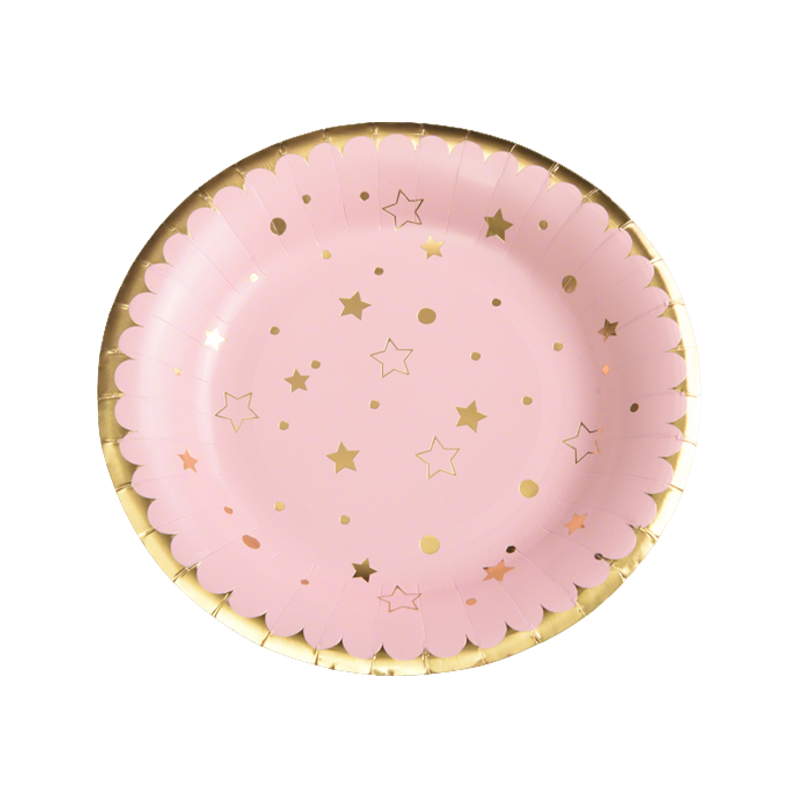
Plate shape influences both food presentation and practical handling within a restaurant workflow. Round paper plates remain the most common general purpose format because their symmetrical shape stacks efficiently and suits most food types. Square paper plates have gained adoption in modern casual dining because their straight edges create a distinct visual presentation for photography and plating. Oval plate and kraft paper oval plate formats are frequently chosen for elongated food items such as sandwiches, wraps, or fish dishes where a round shape would leave excess unused surface area. Lace edged paper plate designs add a decorative border commonly used in catering, dessert service, and event settings where visual presentation carries additional importance.
| Comparison of plate shape suitability across common food service scenarios | ||
| Plate Shape | Typical Strength | Best Fit Scenario |
| Round paper plate | High | General meal service |
| Square paper plate | High | Modern casual presentation |
| Oval plate | Medium to high | Sandwiches and elongated food |
| Lace edged paper plate | Medium | Catering and dessert display |
Durability Behavior Under Sustained Food Contact
Understanding how paper packaging holds up over the duration of a typical meal service helps buyers set realistic expectations for structural performance.
This line chart represents a general structural integrity index for a coated paper food container across increasing minutes of continuous contact with warm moist food, based on common packaging engineering testing patterns referenced in food packaging materials literature such as guidance published by the Foodservice Packaging Institute. Structural integrity remains close to its starting level during the first fifteen to thirty minutes, which covers the majority of typical dine in and takeaway consumption windows. As contact time extends beyond thirty minutes, a gradual decline becomes visible, reflecting slow moisture migration through the coating layer under sustained exposure. This decline remains modest through the first hour for properly coated products, which is why most restaurant food container specifications recommend consumption or transfer within a reasonable serving window rather than extended storage inside the original container. The curve flattens rather than dropping sharply, indicating a gradual rather than sudden performance change, which supports predictable handling during normal service operations. This pattern underscores why coating quality and correct product selection matter more for extended holding scenarios such as delivery than for immediate on site dining.
Matching Format To Food Category
Different food categories place different demands on paper packaging, and the matrix below presents a general suitability pattern based on common catering practice.
| General suitability pattern of paper packaging format by food and beverage category | ||||
| Dry Food | Wet Food | Hot Beverage | Cold Beverage | |
| Paper Plate | High | Medium | Low | Low |
| Paper Bowl | Medium | High | Low | Low |
| Paper Cup | Low | Low | High | High |
| Paper Food Container | High | High | Medium | Medium |
Paper food containers, available in coated paper container and kraft paper food container variants, show the broadest suitability range because their enclosed structure and often lidded design accommodate dry, wet, hot, and takeaway food combinations more flexibly than open format plates or bowls.
Comparing Kraft And White Coated Lines Side By Side
Buyers frequently ask how kraft paper products compare with white coated equivalents across practical attributes beyond visual appearance alone.
This radar chart compares white coated paper packaging, shown in the blue shape, against kraft paper packaging, shown in the yellow shape, across four practical attributes relevant to restaurant food container selection. White coated stock tends to score slightly higher on liquid barrier performance and visual appeal in formal presentation contexts because its smoother surface supports clean printing and a bright neutral appearance. Kraft paper scores notably higher on natural fiber look, which supports its popularity in cafes, bakeries, and casual dining brands that favor an eco forward visual identity. Rigidity scores remain broadly comparable between the two categories since both rely on similar base paperboard weight and construction technique. Liquid barrier performance for kraft paper approaches that of white coated stock once an equivalent coating layer is applied, meaning the functional gap between the two categories is smaller than the visual difference might suggest. This comparison shows that the decision between kraft paper plate and standard white coated paper plate formats often comes down to brand presentation preference rather than a meaningful performance tradeoff.
Recyclability Performance Of Paper Based Packaging
Recyclable disposable meal container products are designed around fiber based materials that fit within standard paper recycling streams once separated from food residue.
This gauge chart represents an approximate fiber recovery potential figure commonly cited for coated paperboard packaging within established paper recycling infrastructure, drawing on general findings discussed in materials published by organizations such as the Sustainable Packaging Coalition. Fiber based products generally integrate more readily into existing paper recycling systems compared with multi material plastic laminated alternatives, since the dominant material fraction is cellulose fiber rather than synthetic polymer. Recovery potential depends partly on coating type, with water based dispersion coatings generally supporting smoother fiber separation during the repulping process compared with certain traditional polymer laminate coatings. Local recycling infrastructure and collection practices also influence actual recovery rates in any given region, so this figure should be understood as a material level potential rather than a guaranteed outcome everywhere. This distinction is one reason sustainable paper packaging is frequently positioned as a lower impact alternative within food service operations focused on reducing reliance on non fiber based disposable products.
Paper Napkins Wrapping Paper And Tablecloth Options
Beyond plates, cups, bowls, and containers, complete restaurant food container programs often include paper napkins, wrapping paper rolls, and disposable paper tablecloths to create a consistent presentation across the dining experience.
- Shaped napkin formats fold into decorative presentations suited to formal table settings and event catering.
- Square napkin formats remain the standard choice for everyday restaurant and quick service dining.
- Coated art wrapping paper provides a smoother printable surface for branded food wrapping applications.
- Pure white wrapping paper offers a neutral base suited to bakery and general food wrapping needs.
- Coated art paper tablecloths support printed pattern designs for themed events and branded dining spaces.
- Pure white paper tablecloths provide a clean neutral surface adaptable to a wide range of table settings.
Consistency across these complementary paper products supports a coordinated presentation for restaurants aiming to reduce plastic tableware while maintaining a polished dining atmosphere.
Sourcing Considerations For Restaurant Food Container Programs
When evaluating a sustainable paper packaging supplier, restaurant and catering buyers typically review several practical factors beyond individual product specifications.
- Consistency of coating application across production batches to avoid variable liquid holding performance.
- Availability of both white coated and kraft paper lines to support different branding needs.
- Capability to support custom printed designs across plates, cups, containers, and napkins.
- Production capacity sufficient to support recurring restaurant supply schedules without frequent shortages.
- Range of complementary products such as wrapping paper rolls and disposable tablecloths within one supply relationship.
Ningbo Kosda New Material Technology Co., Ltd., established in 2015 and located in the Ningbo Binhai Economic Development Zone, operates as an OEM and ODM catering packaging manufacturer producing paper plates, paper cups, paper bowls, paper napkins, paper food containers, wrapping paper rolls, and disposable paper tablecloths across both white coated and kraft paper lines. The company integrates design, research and development, production, and sales within a single modern production facility, allowing coordinated quality control across its full sustainable paper packaging product range.
Inside A Coated Paper Container: Structural Overview
A coated paper food container follows a layered construction that combines fiber strength with barrier performance.
This isometric style schematic shows the general production sequence for a coated paper food container, moving from raw fiber base material through barrier coating application, die cutting and forming, and finally the completed finished container ready for packing and distribution. The fiber base layer starts as processed pulp formed into paperboard sheet, providing the mechanical strength that supports stacking and handling throughout the supply chain. The barrier coating stage applies a controlled thickness layer to one or both sides of the sheet, establishing the moisture and grease resistance properties needed for food contact. The die cut and form stage shapes flat coated sheet into the target product geometry, whether a round paper plate, a paper cup sidewall, or a paper food container base and lid. The finished container then moves through quality inspection before packing, and this staged sequence is broadly consistent across coated paper food packaging production regardless of specific product format or brand.
Industry Direction For Sustainable Paper Packaging
Restaurant and foodservice operators continue to shift toward fiber based disposable products as regulatory attention on single use plastics increases across many regions, a trend broadly reflected in industry reporting from organizations such as the Foodservice Packaging Institute. This shift has encouraged manufacturers to expand kraft paper product lines alongside traditional white coated offerings, giving buyers more flexibility to align packaging appearance with brand positioning while maintaining functional performance. Interest has also grown in matching complementary product categories, such as pairing paper food containers with coordinated napkins, wrapping paper, and tablecloths, so that a restaurant can present a consistent paper based service across dine in, takeaway, and catering formats within one supply relationship rather than mixing packaging types from multiple sources.
About Ningbo Kosda New Material Technology Co., Ltd.
Ningbo Kosda New Material Technology Co., Ltd. is a China based OEM and ODM catering packaging manufacturer and sustainable food packaging supplier, established in 2015 and located in the Ningbo Binhai Economic Development Zone, home to one of the largest deep water ports in the world by throughput. The company operates as a large modern production enterprise integrating design, research and development, production, and sales of paper products for restaurant and catering use.
The company adheres to a principle of quality focused development and advocates green and environmentally friendly product design, supporting the broader industrialization of high technology manufacturing methods within the paper packaging sector. Its product range spans paper plates in round, square, oval, and lace edged formats, white coated and kraft paper cups and bowls, paper napkins in shaped and square styles, coated and kraft paper food containers, wrapping paper rolls in coated art and pure white finishes, and disposable paper tablecloths in coated art and pure white options. Starting from customer requirements, Ningbo Kosda works to provide efficient service across its full recyclable disposable meal container and sustainable paper packaging product range.
Frequently Asked Questions
What is the difference between white coated and kraft paper products
The main difference is visual appearance, with white coated stock offering a clean neutral surface and kraft paper retaining its natural brown fiber tone, while functional performance such as liquid resistance can be comparable once both are coated correctly.
Are paper plates and paper cups suitable for hot food and beverages
Coated paper plates, cups, and bowls are generally designed to hold warm and hot items for typical serving durations, though very high temperature or extended holding periods should be matched against the specific product coating specification.
Can paper food containers be used for both dry and wet food
Yes, coated and kraft paper food containers are typically designed with broader suitability across dry, wet, and takeaway food combinations compared with open plate or bowl formats.
How does recyclability work for coated paper packaging
Coated paper packaging is primarily composed of cellulose fiber, which generally allows it to integrate into standard paper recycling streams once separated from significant food residue, though actual recovery depends on local recycling infrastructure.
What products complement paper plates and containers in a full restaurant program
Paper napkins, wrapping paper rolls, and disposable paper tablecloths are commonly paired with plates, cups, bowls, and containers to create a consistent paper based presentation across dine in, takeaway, and catering settings.
Why do restaurants choose lace edged or oval plate formats
Lace edged paper plates are often selected for catering and dessert presentation where decorative appearance matters, while oval plates suit elongated food items such as sandwiches that do not fit efficiently on a round plate surface.
Your email address will not be published. Required fields are marked *

-
Modern Green And Environmentally Friendly Paper Product Manufacturer
-
Quick Links
Home About Us Products News Contact Us -
Product Categories
Paper Plates Paper Cup Paper Napkin Paper Food Container Disposable Paper Tablecloth Wrapping Paper Roll Paper Cutlery -
Contact Us
 Tel: +86-13967818265
0086-13646629749 E-mail: [email protected]
E-mail: [email protected]
E-mail: [email protected]
E-mail: [email protected]
 Whatsapp: 008613646629749
 Add: 1036 Cidong Avenue, Binhai Economic Development Zone, Ningbo City, Zhejiang Province, China
