
-
About Us
Why Choose Us?
Ningbo Kosda New Material Technology Co., Ltd. was established in 2015 and is located in the Ningbo Binhai Economic Development Zone, China, which is the world's largest deep-water port in terms of throughput and a civilized city in China. It is a large modern production enterprise that integrates the design, research and development, production, and sales of paper products. The company adheres to the principle of quality development, advocates green and environmentally friendly products, and promotes the industrialization of high-tech. Starting from meeting customer needs, we provide high-quality and efficient services.
 Modern Green And Environmentally Friendly Paper Product Manufacturer
 -
Products

-
News




 English
 French
 Español
 German

Industry News
Disposable Paper Plates & Paper Bowls: Sourcing Guide for OEM/ODM Buyers
Content
- 1 What to Look for When Sourcing Disposable Paper Plates and Paper Bowls
- 2 Paper Bowls vs Disposable Paper Plates: Material Composition and Core Differences
- 3 Global Market Growth for Biodegradable Paper Plates and Bowls
- 4 Regulatory and Sustainability Pressures Accelerating the Shift Away from Plastic
- 5 Regional Demand Patterns Shaping Global Sourcing Decisions
- 6 What's Driving Demand for Eco-Friendly Disposable Tableware
- 7 Consumer Preference for Biodegradable Paper Tableware
- 8 Shapes, Sizes, and Customization Options for OEM and ODM Orders
- 9 From Pulp to Finished Product: Manufacturing Technology Behind Paper Bowls and Plates
- 10 Structural Performance: Leak Resistance and Food-Grade Safety Standards
- 11 Choosing a Reliable China Paper Plate Manufacturer for OEM/ODM Partnerships
- 12 About Ningbo Kosda New Material Technology Co., Ltd.
- 13 Frequently Asked Questions
What to Look for When Sourcing Disposable Paper Plates and Paper Bowls
The most reliable disposable paper plate and paper bowls programs are built on three things: food-grade fiber board, a moisture- and grease-resistant coating, and consistent production control from an experienced China manufacturer. Buyers evaluating a new supplier for parties, picnics, catering events, or daily dining should prioritize verified material sourcing, leak-resistance testing, and OEM/ODM customization flexibility over unit price alone, since these factors determine whether a product performs consistently across large order volumes.
Paper-based tableware, sometimes marketed as foodstuff paper plates or biodegradable paper plate lines, has become the default choice for foodservice operators moving away from plastic. Round, square, and oval paper plates, along with deep-draw paper bowls, are now standard across catering companies, quick-service restaurants, grocery deli counters, and household party supply retailers. This shift is not only a sustainability response but also a practical one: paper tableware is lightweight, portable, stackable, and easy to source in bulk from a professional China factory with the capacity to run large production batches.
This guide walks through the material differences between paper bowls and paper plates, the market and regional demand data behind the category's growth, the manufacturing technology used to produce them, and what to check before selecting a China supplier for an OEM or ODM order.
The category also spans a wider functional range than many buyers initially expect. A single product line can serve as an adjustable, multifunction solution across several channels at once: the same coated paper bowl used for a delivery order can be repackaged as a portable picnic set item, and the same round plate produced for a hotel buffet can be resized for a supermarket private-label program. Because of this flexibility, buyers increasingly look for one manufacturer capable of supporting several product formats rather than working with separate factories for plates, bowls, and specialty catering items. This is one reason wholesale buyers, brand owners, and exporters continue to consolidate sourcing with fewer, more capable China producers rather than spreading small orders across many smaller workshops.
Paper Bowls vs Disposable Paper Plates: Material Composition and Core Differences
Although paper bowls and disposable paper plates are often grouped together in catalogs, they are engineered differently. A paper plate is a flat, rimmed structure that needs edge stiffness to resist bending under the weight of food, while a paper bowl is a deep-draw structure that needs higher wall rigidity and a stronger base seam to hold liquids such as soup, noodles, or sauces without leaking. Both product types typically start from one of three base materials:
- White cardboard (SBS paperboard): a bleached, food-grade board that gives a clean printing surface and a premium appearance, commonly used for oval and round plates in catering settings.
- Coated paper: paperboard finished with a water-based, functional barrier coating that improves grease and moisture resistance, suited to both plates and bowls used for hot or oily food.
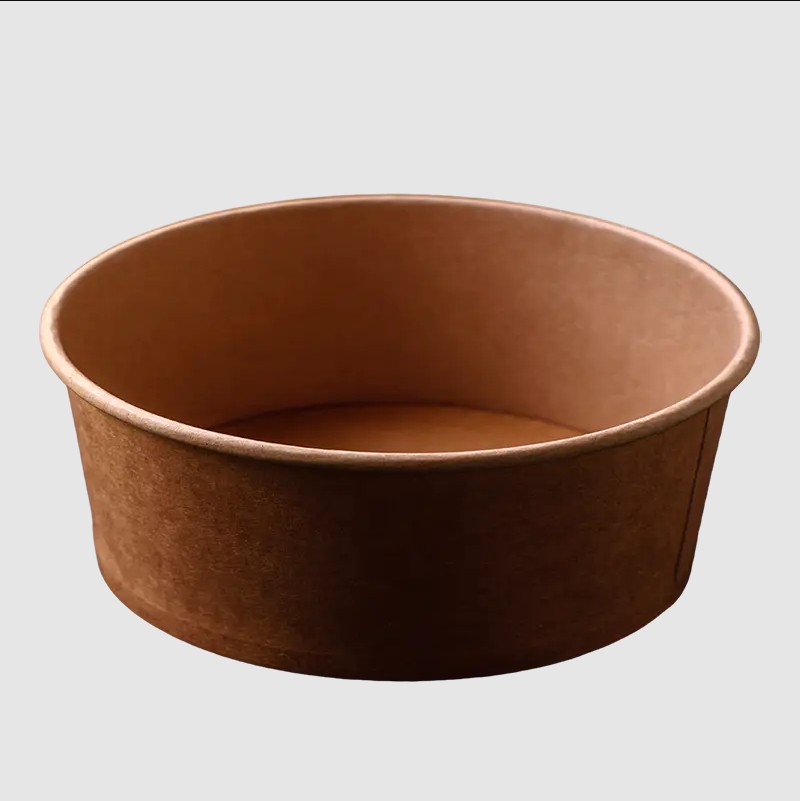
- Eco-friendly kraft paper: unbleached natural fiber board that signals sustainability to end consumers, popular for picnic sets and daily dining lines that market themselves as eco friendly.
Shape also affects material choice. Round shapes are the most material-efficient to die-cut and are typically the lowest-cost option for high-volume wholesale orders. Square shapes are popular in modern catering and bento-style presentations because they nest and stack with less wasted space. Oval shapes are generally reserved for main-course serving where a longer plate profile is needed. A professional manufacturer will usually recommend a material and shape combination based on the intended food type, expected serving temperature, and whether the plates need to be microwave-safe or oven-adjacent, rather than defaulting to a single standard option for every buyer.
Cost and print quality also move together with material choice. White cardboard offers the cleanest surface for full-color printing, which makes it a common choice for brands that want sharp logo reproduction on a retail-facing product. Kraft paper has more visible fiber texture, which limits fine print detail but reinforces a natural, eco-friendly appearance that many households now associate with sustainable dining. Coated paper sits between the two: it accepts branding reasonably well while adding the functional barrier layer needed for oily or hot food. A durable, reliable supplier should be able to explain these trade-offs clearly during the quotation stage rather than leaving a buyer to discover a print-quality or grease-resistance limitation only after the first production run has shipped.
Global Market Growth for Biodegradable Paper Plates and Bowls
Demand for paper-based tableware has grown steadily as foodservice brands and retailers phase out single-use plastics. According to Grand View Research, the global biodegradable tableware market was valued at approximately USD 15.27 billion in 2023 and is projected to reach USD 24.69 billion by 2030, reflecting a compound annual growth rate of roughly 7.1 percent. The chart below plots the implied year-by-year trajectory of that growth using the reported base year and CAGR.
The curve shows a consistent upward trend rather than a sudden spike, which matters for buyers planning multi-year sourcing contracts. A steady CAGR in the 7 percent range means demand growth is broad-based across regions and end uses, not concentrated in a single seasonal event. Regulatory pressure is a major contributor: government bans and restrictions on single-use plastics in multiple regions have pushed foodservice operators toward paper-based alternatives. The commercial segment, including restaurants, cafes, and catering services, has consistently held the largest revenue share within the biodegradable tableware category, according to Grand View Research. Within that broader tableware category, plates and bowls together represent one of the largest product types by volume, since both are everyday consumables rather than occasional-use items. For a China manufacturer, this steady growth pattern supports continued investment in additional forming lines and coating capacity rather than short-term capacity expansion. For buyers, it also means that supplier relationships built now are likely to remain relevant as order volumes scale over multiple years rather than a single season. Manufacturers that can demonstrate consistent quality across this growth curve, rather than only during initial sample orders, tend to become long-term wholesale partners rather than one-off suppliers.
This growth trajectory also has implications for raw material planning. As demand for coated and kraft paper board increases across the industry, buyers who lock in supply agreements with an established China factory tend to experience more predictable lead times than those relying on spot-market purchasing. A manufacturer with in-house pulp board sourcing relationships, rather than one that buys finished board on a shipment-by-shipment basis, is generally better positioned to absorb short-term raw material fluctuations without passing repeated delays on to buyers.
Regulatory and Sustainability Pressures Accelerating the Shift Away from Plastic
A significant share of the growth described above is policy-driven rather than purely consumer-led. Multiple governments have introduced restrictions on single-use plastic tableware over the past several years, and each new policy tends to push a measurable volume of demand toward paper-based substitutes such as disposable paper plates and paper bowls.
- The European Union has advanced directives targeting single-use plastic tableware, prompting foodservice operators across member states to transition toward paper and other biodegradable alternatives.
- Several U.S. states, including California and New York, have introduced restrictions on specific single-use plastic foodware categories, which has increased demand for compliant paper substitutes among regional and national foodservice chains.
- Growing corporate sustainability commitments among restaurant groups, hotel chains, and retailers have added a second layer of demand that is independent of regulation, as brands adopt paper tableware as part of broader environmental, social, and governance reporting goals.
For a buyer, this regulatory backdrop is useful context when planning multi-year contracts: it suggests that demand for compliant, verifiably biodegradable paper plate and paper bowl products is more likely to keep expanding than to plateau, since new regional policies continue to be introduced in markets that have not yet adopted plastic restrictions. Working with a manufacturer that already understands food-contact documentation requirements across multiple export markets reduces the risk of a shipment being delayed or rejected due to missing compliance paperwork.
Regional Demand Patterns Shaping Global Sourcing Decisions
Regional demand for disposable paper plates is not evenly distributed, and understanding this distribution helps buyers anticipate lead times, shipping routes, and seasonal order timing when sourcing from China. Based on industry regional demand estimates, Asia-Pacific accounts for the largest share of global consumption, followed by North America, Europe, and the Middle East and Africa region.
Asia-Pacific's leading share reflects both its role as a major manufacturing base and its rapidly expanding domestic foodservice sector, driven by urbanization and rising delivery and takeaway volumes. North America remains the largest single mature market, supported by an established catering and party-goods retail infrastructure and strong household demand for convenience dining. Europe's smaller but meaningful share is shaped by strict single-use plastic regulations that continue to push volume toward paper alternatives. The Middle East and Africa region represents the smallest current share but is frequently cited as an emerging growth area as foodservice infrastructure expands. For a wholesale buyer or exporter, this distribution suggests that a China factory positioned near major ports is well placed to serve both the fast-growing Asia-Pacific market and long-haul export demand to North America and Europe simultaneously, which is one reason many international buyers continue to source paper bowls and paper plates from China rather than smaller regional producers.
Logistics timing should also factor into regional sourcing plans. Buyers in North America and Europe placing large wholesale orders typically need to account for ocean freight transit time in addition to production lead time, which means demand forecasting several months ahead of peak seasons such as summer picnics, back-to-school events, and year-end holiday catering is standard practice. A China exporter familiar with these seasonal cycles can often advise on realistic order timing, helping buyers avoid the higher air-freight costs that come with placing orders too close to a peak demand period.
What's Driving Demand for Eco-Friendly Disposable Tableware
Buyer and consumer preference data helps explain why paper plates and bowls continue to gain share against plastic alternatives. Industry research on the disposable plate category identifies several overlapping demand drivers, with household convenience preference, an eco-friendly buyer shift, and delivery-related packaging demand ranking among the most cited factors.
Household convenience preference leads the list, reflecting the simple fact that paper plates and bowls remove the need for washing dishes at parties, picnics, and everyday meals. The eco-friendly buyer shift is the second-largest driver, showing that sustainability positioning is no longer a niche marketing angle but a mainstream purchasing factor for both households and commercial buyers. Delivery-related demand reflects the parallel growth of food delivery platforms, where paper bowls in particular are favored for their ability to hold hot liquids and sauces without the structural weaknesses of thinner plastic containers. These three drivers reinforce each other: a brand marketing itself as eco friendly and reliable can appeal to convenience-focused households while also meeting the practical leak-resistance needs of delivery packaging, which is why many catering companies now request the same paper bowl specification for both dine-in and takeaway service rather than maintaining two separate product lines.
Secondary trend indicators reinforce the same direction. Industry trend analysis also points to rising interest in compostable product lines, growing adoption of premium coated finishes, and a noticeable concentration of order volume around seasonal peaks:
- Compostable product interest has grown by roughly 44 percent, reflecting expanding buyer willingness to pay for verified compostable material grades.
- Premium coated adoption has increased by approximately 31 percent, as brands look for a more polished, food-safe finish for catering and retail presentation.
- Seasonal peak concentration accounts for around 30 percent of annual order volume, underscoring the importance of planning production capacity well ahead of major holiday and event seasons.
Taken together, these figures suggest that the market is not just growing in overall volume but also shifting in composition, with a rising share of orders specifying compostable materials and premium finishes rather than the most basic uncoated board. Manufacturers that have invested in both material technology and printing capability are better positioned to serve this shifting order mix than factories offering only a single basic product tier.
Consumer Preference for Biodegradable Paper Tableware
Beyond structural demand drivers, direct consumer preference data reinforces the shift toward biodegradable options. Industry survey data cited in disposable plate market research indicates that roughly 60 percent of consumers now prefer biodegradable tableware over conventional alternatives, and separate research found eco-friendly plates accounted for approximately 45 percent of disposable plate sales in a recent measured year.
This preference level is significant because it now represents a majority position rather than a minority trend among environmentally aware buyers. For brand owners and retailers, this means marketing a product line as biodegradable paper plate or eco friendly tableware is likely to resonate with a majority audience rather than a small segment. It also has practical sourcing implications: a professional manufacturer that can supply verified compostable or biodegradable-grade materials, alongside standard coated paper options, gives a buyer flexibility to serve both price-sensitive and sustainability-focused customer segments from the same supplier relationship. Buyers working with a China supplier should ask specifically which product lines qualify as biodegradable or compostable under recognized testing standards, since not every paper-based product automatically meets those criteria once a functional coating has been applied.
Brands communicating this preference data to their own customers should be careful to describe claims accurately rather than using absolute or guarantee-style language. Stating that a product is "made from biodegradable paper board" or "designed to meet composting standard X" is generally more defensible than claiming a product is universally "100 percent eco-friendly," since actual breakdown outcomes depend on the disposal environment, whether an industrial composting facility is available locally, and how the product was used. A reliable manufacturer should be transparent about these limitations rather than encouraging overstated marketing claims that could create compliance risk for the brand owner in stricter regulatory markets.
It is also worth distinguishing between biodegradable and compostable claims, since the two terms are related but not interchangeable. Biodegradable generally means a material will break down over time through natural biological processes, while compostable typically refers to a material that breaks down within a defined period under specific composting conditions, often verified against a recognized testing standard. A product line can be accurately described as biodegradable without necessarily meeting the stricter definition of compostable, and buyers building retail packaging language should confirm with their manufacturer which claim is actually supported by test data before finalizing artwork.
Shapes, Sizes, and Customization Options for OEM and ODM Orders
A professional OEM manufacturer or ODM manufacturer will typically offer a standard size matrix as a starting point, then adjust dimensions, ply thickness, and surface finish to match a buyer's brand requirements. The table below summarizes common shape and size ranges used across catering, picnic, and daily dining applications.
| Common paper plate and paper bowl shapes, sizes, and typical applications across catering and retail programs | |||
| Shape / Type | Typical Size Range | Common Use Case | Recommended Material |
| Round Paper Plate | 6 in - 10 in (15-26 cm) | Daily dining, buffets, quick service | White cardboard, coated paper |
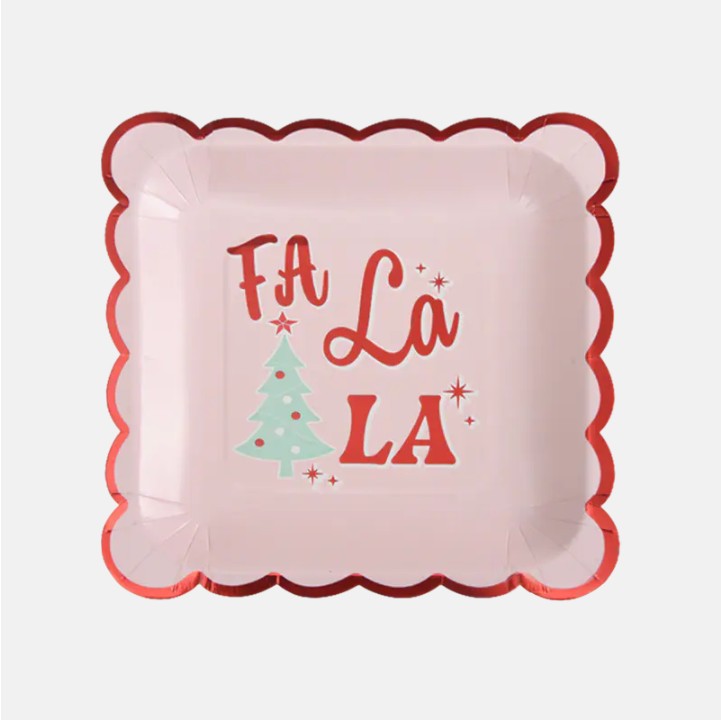
| Square Paper Plate | 6 in - 10 in (15-26 cm) | Modern catering, bento-style service | Coated paper, kraft paper |
| Oval Paper Plate | 9 in - 12 in (23-30 cm) | Main courses, banquet service | White cardboard |
| Paper Bowl | 12 oz - 26 oz (350-750 ml) | Soups, salads, noodles, snacks | Kraft paper, coated paper |
Beyond size, most OEM/ODM projects also involve customization of the following:
- Surface treatment, such as matte, gloss, or embossed textures for a more premium feel.
- Printing and pattern options, from single-color branding to full-color, multifunction party-set designs.
- Adjustable ply thickness and rim depth, depending on whether the product needs to hold dry snacks or hot liquid.
- Packaging format, including sleeve counts and retail-ready display packs for wholesale distribution.
Packaging format deserves particular attention for buyers planning private-label or retail programs. A wholesaler stocking supermarket shelves usually needs a different pack configuration than a catering company buying bulk sleeves for internal use. Common formats include shrink-wrapped sleeves of 25 to 100 units for foodservice buyers, printed retail boxes of 20 to 50 units with barcode and nutrition-adjacent labeling for supermarket distribution, and bulk case packs sized for efficient container loading on large export orders. A professional manufacturer should be able to quote multiple packaging formats for the same underlying plate or bowl, since the finished packaging cost per unit can vary meaningfully between a basic export case and a fully branded retail-ready box.
From Pulp to Finished Product: Manufacturing Technology Behind Paper Bowls and Plates
Understanding the production process helps buyers ask more informed questions when auditing a factory. Most paper plates and bowls move through a similar sequence of machine-driven steps, though the specific technology used for forming can vary between paperboard die-pressing and wet-pulp molding depending on the product design.
- Raw material preparation: virgin or recycled pulp board, or kraft base paper, is inspected and calibrated for moisture and thickness consistency.
- Coating application: a food-grade functional barrier coating is applied to improve grease and moisture resistance where required.
- Forming: the coated board is fed into a die-forming or heat-pressing machine that shapes the flat blank into a plate or deep-draw bowl profile.
- Rim finishing and trimming: excess material is trimmed and the rim edge is curled or crimped for structural strength.
- Printing and branding: logos, patterns, or OEM/ODM branding are applied using food-safe inks.
- Quality inspection and packing: finished units are checked for leak resistance and dimensional consistency before being packed into sleeves or cartons for wholesale shipment.
Fig. 1: Stacked paper plate packaging (isometric schematic view)
Fig. 2: Simplified material layer structure of a coated paper plate or bowl
Machine consistency matters more than most buyers initially expect. Two factories using the same raw board can produce noticeably different rim strength and leak resistance if their forming machine calibration or coating application technology differs. This is one reason experienced buyers ask for a factory audit or production video before placing a first wholesale order, rather than relying solely on a sample that may have been hand-finished rather than produced on the standard line.
Environmental controls within the production process itself are also increasingly relevant to buyers with sustainability commitments of their own. Water-based coating technology, rather than solvent-based alternatives, reduces volatile emissions during the coating step, while efficient die-forming machine calibration reduces material waste by minimizing off-cut scrap during trimming. Many factories also route pulp process water through basic treatment systems before discharge or reuse. Buyers sourcing for a brand with its own environmental reporting requirements may want to ask specifically about these production-level practices, since a factory's internal environmental controls are a separate question from whether the finished product itself is biodegradable.
Structural Performance: Leak Resistance and Food-Grade Safety Standards
Performance testing separates a durable, reliable supplier from one that only looks good in a sample box. Buyers evaluating a manufacturer for catering-grade paper bowls and plates should confirm the following before committing to a large order:
- Grease and oil resistance for foods such as fried items or sauces that can weaken uncoated paper fiber.
- Hot and cold liquid holding time without softening or leaking at the base seam, particularly for paper bowls.
- Edge and rim crush strength, which affects whether a plate holds its shape when stacked or loaded with food.
- Food-contact material compliance documentation appropriate to the destination market.
- Compostability or biodegradability certification, where the product is marketed under that positioning.
A reliable China factory should be able to provide test reports for these categories on request rather than only general marketing claims. It is also reasonable to request a wet-hold test on-site or in a video call, since watching a bowl hold hot liquid for a set period is a simple but effective way to verify real-world performance before a purchase order is finalized.
Buyers exporting to regulated markets commonly ask about food-contact frameworks such as FDA 21 CFR requirements in the United States, EU Regulation 1935/2004 for materials intended to contact food in Europe, and Germany's LFGB standard. These are useful reference points to raise during supplier evaluation, since asking a manufacturer how their materials align with the specific framework relevant to the destination market is a more reliable way to assess readiness than accepting a general claim of "food safe" without further detail. A professional supplier should be comfortable walking through which of its product lines are supported by which documentation, and should not present every SKU as automatically compliant with every regional standard.
Choosing a Reliable China Paper Plate Manufacturer for OEM/ODM Partnerships
China remains home to a large number of paper tableware producers, brands, and wholesale exporters, which gives buyers strong sourcing options but also makes supplier evaluation important. When comparing a China manufacturer, China producer, or China wholesale supplier, consider the following criteria:
- Production capacity and whether the factory can scale from a small ODM sample run to a full wholesale container order.
- Export experience, including familiarity with destination-market labeling and food-contact documentation requirements.
- Flexibility on OEM branding versus ODM design development for buyers who need a fully custom product rather than a relabeled stock item.
- Sample turnaround time and willingness to run a small test batch before committing to a full production order.
- Transparency around material sourcing, since this directly affects whether a biodegradable or eco friendly claim can be substantiated.
Working with a professional supplier that treats documentation, sampling, and communication seriously tends to reduce the risk of quality disputes later in the relationship. Many buyers find it useful to start with a smaller trial order from a China exporter, confirm consistency across two or three production runs, and only then commit to the larger wholesale volumes that make long-term OEM/ODM sourcing cost-effective.
Minimum order quantities vary widely across China producers and brands depending on shape complexity, coating requirements, and whether custom printing is involved. A standard uncoated round plate generally carries a lower minimum than a fully customized, printed, deep-draw paper bowl, since the latter requires dedicated tooling and coating line time. Buyers new to a category should ask the manufacturer to break down the minimum order quantity by product type rather than assuming a single blanket minimum applies across the entire catalog, since this is one of the most common sources of miscommunication in early-stage supplier discussions.
Communication reliability during the pre-production stage is another practical indicator worth weighing alongside price. A supplier that responds promptly to technical questions about coating thickness, print color matching, or carton dimensions before an order is placed is generally more likely to communicate proactively if a production issue arises later. Buyers evaluating multiple China manufacturers side by side often find it useful to send the same detailed technical question to each candidate and compare not only the answer but the speed, clarity, and completeness of the response, since this small test frequently predicts how a larger production relationship will function under time pressure.
About Ningbo Kosda New Material Technology Co., Ltd.
Ningbo Kosda New Material Technology Co., Ltd. is a China OEM/ODM catering packaging manufacturer and sustainable food packaging supplier, established in 2015 and located in the Ningbo Binhai Economic Development Zone, home to one of the world's largest deep-water ports by throughput. As a large modern production enterprise integrating design, research and development, production, and sales of paper products, the company applies a quality-first development approach and supports the industrialization of green, environmentally conscious manufacturing. Its product range covers white cardboard, coated paper, and eco-friendly kraft paper plates and paper bowls in round, square, and oval formats, with customization available across sizes, surface treatments, patterns, and process specifications for parties, picnics, catering events, and daily dining. Starting from customer requirements, the company focuses on solid construction, leak resistance, and food-grade safety across both standard stock items and fully customized OEM solutions, aiming to provide efficient, dependable service to buyers sourcing paper tableware from China.
By keeping design, research and development, production, and sales under one integrated operation, Ningbo Kosda New Material Technology Co., Ltd. is positioned to support buyers throughout the full project lifecycle, from initial material selection and sample development through to full wholesale production runs. This integrated structure is particularly relevant for OEM and ODM partners who need a single point of contact rather than coordinating separately with a design studio, a converting factory, and a printing subcontractor.
Frequently Asked Questions
Q1: What is the difference between a disposable paper plate and a biodegradable paper plate?
A1: A disposable paper plate is any single-use plate made from paper-based material, while a biodegradable paper plate specifically uses materials and coatings that break down under composting conditions within a defined timeframe. This usually requires verified material sourcing and, in some cases, third-party certification, so buyers should confirm the specific standard a product is tested against rather than assuming all paper plates qualify equally.
Q2: Can paper bowls hold hot liquids without leaking?
A2: Paper bowls made with a proper functional barrier coating and correctly formed base seam are designed to hold hot liquids such as soup or noodle broth for typical serving periods. Performance still depends on food temperature, holding time, and base seam quality, so buyers should confirm wet-hold performance with the manufacturer for their specific food type before committing to a full production order.
Q3: What is the difference between OEM and ODM for paper plate orders?
A3: An OEM order typically applies a buyer's branding to an existing product design, while an ODM order involves the manufacturer developing a new or customized design, size, or material specification based on the buyer's requirements. Many buyers start with an OEM order on a stock design and move to ODM development once order volumes justify custom tooling.
Q4: Why do many international buyers source paper plates and paper bowls from China?
A4: China hosts a large concentration of paper tableware manufacturers, producers, and exporters with established production technology, flexible OEM/ODM customization, and port access that supports efficient wholesale shipping to North America, Europe, and other regions, which together make it easier to consolidate multiple product needs with a single reliable supplier.
Your email address will not be published. Required fields are marked *

-
Modern Green And Environmentally Friendly Paper Product Manufacturer
-
Quick Links
Home About Us Products News Contact Us -
Product Categories
Paper Plates Paper Cup Paper Napkin Paper Food Container Disposable Paper Tablecloth Wrapping Paper Roll Paper Cutlery -
Contact Us
 Tel: +86-13967818265
0086-13646629749 E-mail: [email protected]
E-mail: [email protected]
E-mail: [email protected]
E-mail: [email protected]
 Whatsapp: 008613646629749
 Add: 1036 Cidong Avenue, Binhai Economic Development Zone, Ningbo City, Zhejiang Province, China
