
-
About Us
Why Choose Us?
Ningbo Kosda New Material Technology Co., Ltd. was established in 2015 and is located in the Ningbo Binhai Economic Development Zone, China, which is the world's largest deep-water port in terms of throughput and a civilized city in China. It is a large modern production enterprise that integrates the design, research and development, production, and sales of paper products. The company adheres to the principle of quality development, advocates green and environmentally friendly products, and promotes the industrialization of high-tech. Starting from meeting customer needs, we provide high-quality and efficient services.
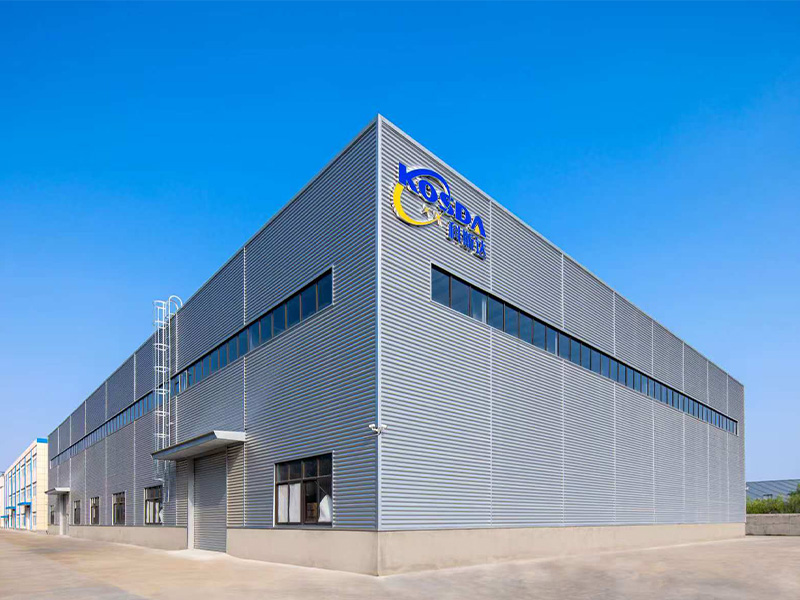 Modern Green And Environmentally Friendly Paper Product Manufacturer
 -
Products

-
News



 English
 French
 Español
 German

Industry News
Why Are Biodegradable Paper Plates Reshaping Catering Packaging?
Disposable paper plates made from white cardboard, coated paper, or kraft paper give caterers, event planners, and households a food-safe, leak-resistant, and biodegradable alternative to traditional tableware, and the right choice depends mainly on the event type, the food being served, and the level of environmental commitment a business wants to show. For parties, picnics, catering events, and daily dining, a well-constructed foodstuff paper plate combines solid rigidity with responsible material sourcing, and this guide breaks down exactly how these plates are made, how they perform, and how to select the correct type for a given use case.
Content
- 1 What Defines a Reliable Disposable Paper Plate
- 2 Material Choices: White Cardboard, Coated Paper, and Kraft Paper
- 3 How Paper Plates Are Constructed: An Isometric View
- 4 Shape and Size Customization for Different Occasions
- 5 Comparing Material Attributes at a Glance
- 6 Sustainability Considerations for Biodegradable Paper Plates
- 7 Food-Grade Safety and Leak Resistance in Manufacturing
- 8 Industry Direction: Why Demand for Eco-Friendly Tableware Continues to Grow
- 9 How to Choose the Right Paper Plate for Your Order
- 10 About Ningbo Kosda New Material Technology Co., Ltd.
- 11 Frequently Asked Questions
- 11.1 Are disposable paper plates safe for hot food
- 11.2 What is the difference between coated paper and kraft paper plates
- 11.3 Can paper plates be customized for branded catering events
- 11.4 Are biodegradable paper plates suitable for outdoor picnics
- 11.5 How should buyers evaluate a paper plate manufacturer before ordering
What Defines a Reliable Disposable Paper Plate
A dependable disposable paper plate has to satisfy three practical demands at once: it must hold its shape under the weight and moisture of food, it must remain safe for direct food contact, and it must break down responsibly once it is discarded. Foodstuff paper plates that meet these criteria are typically built from layered pulp fibers, sometimes finished with a thin, food-grade coating that improves resistance to oil and light liquids without compromising the biodegradable nature of the base material. The structural integrity of a paper plate comes primarily from fiber density and the pressing process used during manufacturing, rather than from any single additive, which is why sourcing consistent raw material is central to product quality.
Buyers evaluating a biodegradable paper plate supplier should look closely at how the plate performs with actual food loads rather than relying on appearance alone. A plate that looks sturdy on a shelf can still underperform if it has not been engineered for load-bearing strength across its diameter, particularly with round or oval shapes that carry weight unevenly compared to square designs. This is one of the reasons manufacturing partners that offer customization across shapes, sizes, and surface treatments tend to serve a wider range of catering and party applications more effectively than suppliers offering only a single standard format.
Material Choices: White Cardboard, Coated Paper, and Kraft Paper
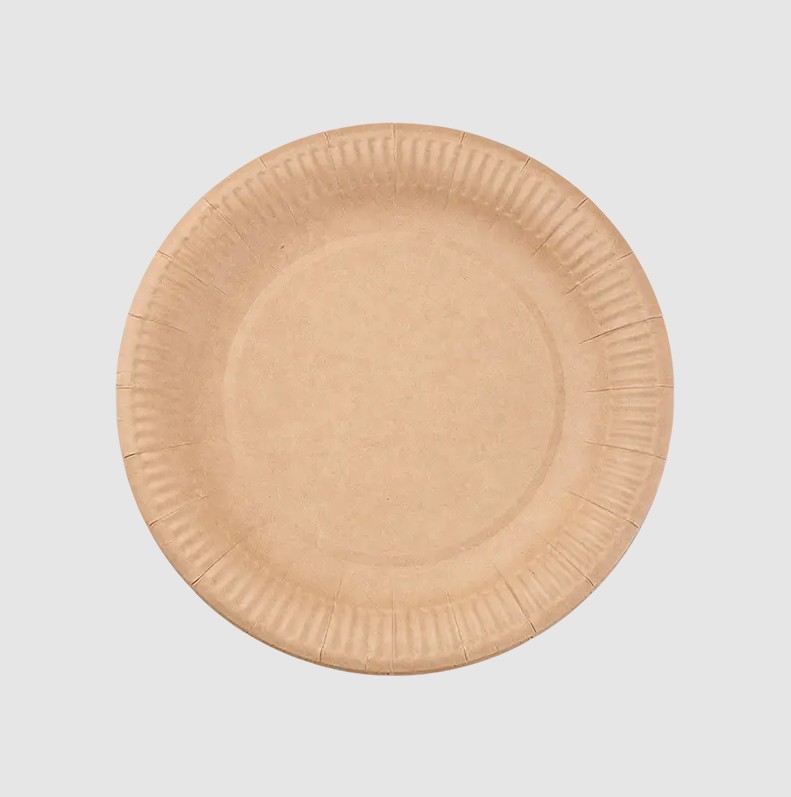
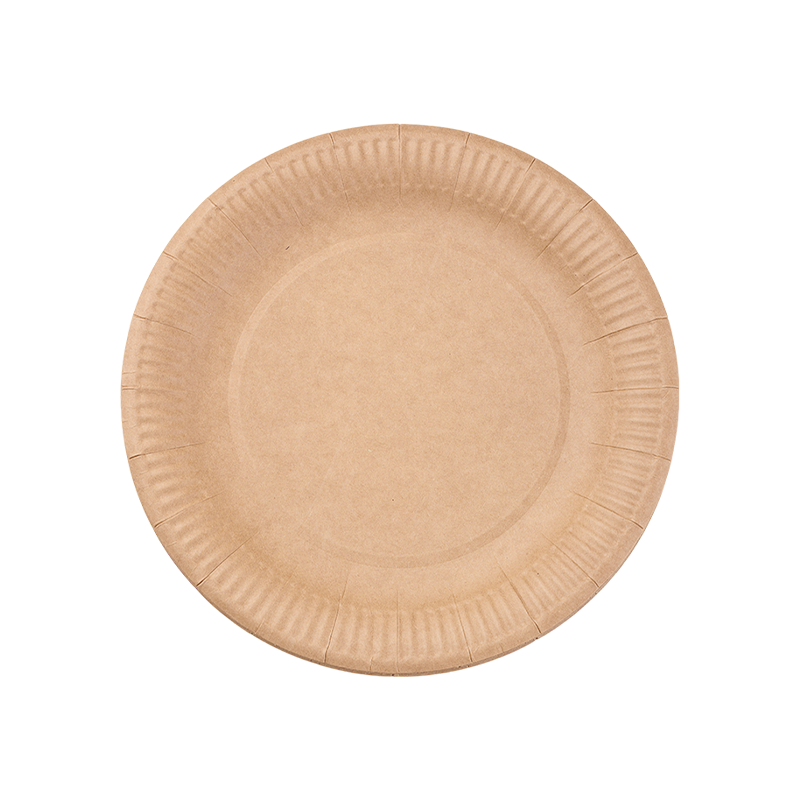
Not every paper plate material serves the same purpose, and understanding the difference between white cardboard, coated paper, and eco-friendly kraft paper helps buyers match the product to its intended use. White cardboard plates generally offer a clean, bright surface that suits formal catering presentation, while coated paper plates add a light barrier layer that helps with moderate moisture and grease resistance, making them suitable for foods like sandwiches, pastries, and light snacks. Kraft paper plates, by contrast, are chosen specifically for their natural, minimally processed appearance and their strong association with sustainable packaging positioning, which resonates with buyers seeking compostable or environmentally conscious tableware.
| Material | Typical Appearance | Best Suited For | Moisture Handling |
|---|---|---|---|
| White Cardboard | Bright, uniform surface | Formal catering, buffets | Moderate |
| Coated Paper | Smooth finish, light sheen | Snacks, pastries, light meals | Improved |
| Kraft Paper | Natural brown tone | Picnics, eco events, outdoor dining | Basic to moderate |
How Paper Plates Are Constructed: An Isometric View
The strength of a foodstuff paper plate comes from how its pulp layers are pressed and shaped, not from any single surface treatment. The isometric diagram below shows a simplified cross section of a pressed paper plate, illustrating the base fiber layer, the optional food-grade coating layer, and the rim structure that gives the plate its rigidity around the edge. Manufacturers pay particular attention to rim thickness because a plate with an underbuilt rim tends to bend under the weight of liquids or heavier food portions, even if the center of the plate feels sturdy. The pressing process also determines how evenly the plate distributes weight, which is why consistent quality control at the molding stage matters more to real-world performance than cosmetic finishing. This structural approach applies across round, square, and oval shapes, with only minor adjustments to press tooling required to accommodate each shape.
Shape and Size Customization for Different Occasions
Round plates remain the most common format for general catering because their shape distributes structural stress evenly around the rim, which makes them reliable for a wide range of food weights. Square plates have gained popularity in modern event styling because they present food attractively on tables and stack efficiently for storage and transport, though their corners require slightly reinforced pressing to avoid weak points. Oval plates are frequently chosen for dishes that need extra surface length, such as long sandwiches or garnished mains, and they are popular in catering settings where visual presentation matters as much as function.
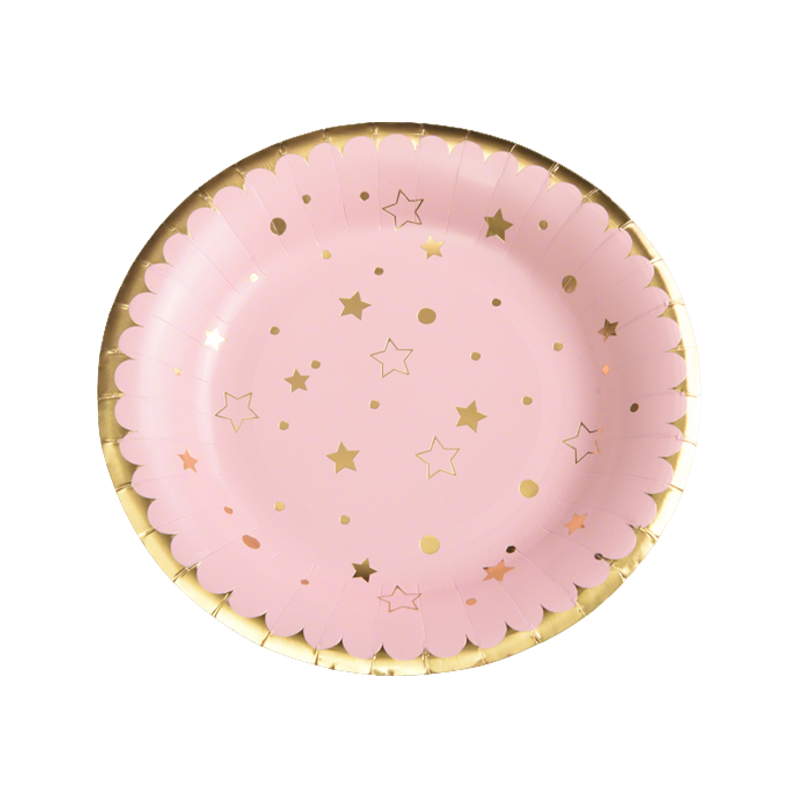
Beyond shape, size customization plays an equally important role in matching a paper plate to its use case. Smaller diameters suit dessert tables and appetizer stations, mid-range sizes handle everyday buffet or picnic servings, and larger formats are typically reserved for full-course catering where multiple food items share the same plate. Surface treatments and printed patterns can also be adjusted to align with party themes or brand presentation, and process specifications such as edge rolling or rim depth can be tailored for buyers who need a specific balance between rigidity and lightweight stacking.
Comparing Material Attributes at a Glance
The chart below offers a general, relative comparison of white cardboard, coated paper, and kraft paper across four practical attributes that buyers commonly weigh against each other: rigidity, moisture handling, biodegradability, and suitability for printed branding. This comparison is intended as a directional guide for sourcing decisions rather than a precise laboratory measurement, since actual performance varies with gram weight, press quality, and storage conditions. Kraft paper generally scores strongly on biodegradability because it undergoes less processing, while coated paper tends to perform better on moisture handling due to its added barrier layer. White cardboard often sits in the middle across most categories, which is part of why it remains a common default choice for general catering. Buyers with a strong sustainability focus for picnics or eco-themed events frequently lean toward kraft paper, while buyers serving oilier or wetter foods tend to prefer coated paper.
It is worth noting that these relative comparisons are meant to help buyers ask the right questions of a manufacturer rather than substitute for reviewing an actual product specification sheet. A responsible OEM or ODM supplier should be able to explain, for any given order, exactly which fiber composition and coating approach was used and why it suits the buyer's intended application.
Sustainability Considerations for Biodegradable Paper Plates
Sustainability has become one of the leading purchasing criteria for tableware buyers in catering, hospitality, and retail packaging, and biodegradable paper plates are frequently positioned as a practical response to that demand. Because paper plates are made primarily from wood pulp fibers, they generally break down under normal composting or landfill conditions far more readily than plastic-based tableware, which is one of the central reasons foodstuff paper plates are used as an environmentally conscious alternative to traditional plastic or foam plates. Many buyers pursuing sustainability goals specifically request compostable options, and kraft paper plates in particular are often chosen for this purpose because they avoid heavier surface coatings that can slow decomposition.
That said, sustainability claims should always be evaluated against the specific coating and finishing used on a given product, since a heavily laminated paper plate may decompose more slowly than an uncoated one. Buyers seeking genuinely compostable tableware should ask suppliers directly about the coating composition and disposal recommendations for each product line, rather than assuming that all paper-based plates behave identically once discarded. This kind of transparency is also increasingly expected by end consumers, many of whom now check packaging materials before making a purchase decision at catering events or retail food counters.
Food-Grade Safety and Leak Resistance in Manufacturing
Food-grade safety in paper plate manufacturing depends on controlling three variables: the purity of the pulp source, the food-contact safety of any coating applied, and the consistency of the pressing process that shapes the final plate. A plate that is not pressed to consistent density can develop weak points that lead to leaking, particularly with foods that release oil or moisture during serving. Leak resistance is generally achieved through a combination of fiber density and, where needed, a thin food-safe coating rather than through thickness alone, which allows manufacturers to keep plates lightweight while still meeting practical durability requirements for catering and daily dining use.
Quality-focused manufacturers typically test plates under realistic conditions, including exposure to warm, oily, or moist foods, to confirm that the plate holds its shape for the expected duration of a meal or event. This kind of testing is especially important for OEM and ODM buyers who plan to distribute paper plates under their own branding, since consistent performance protects both the buyer's reputation and the end user's experience.
Industry Direction: Why Demand for Eco-Friendly Tableware Continues to Grow
Packaging industry commentary has consistently pointed to a shift away from single-use plastic tableware toward fiber-based alternatives, driven largely by tightening environmental regulations in several regions and by shifting consumer expectations around food service packaging. This trend has been especially visible in the catering and hospitality sectors, where operators increasingly look for tableware that aligns with broader sustainability commitments made to clients and event organizers. Foodstuff paper plates sit at the center of this shift because they offer a familiar, easy-to-use format that requires no behavioral change from the end consumer while still meeting sustainability expectations.
For manufacturers and trading companies supplying this category, the practical implication is that flexibility matters just as much as sustainability positioning. Buyers increasingly request a mix of standard stock items for predictable, high-volume needs alongside fully customized OEM solutions for branded events or specialized catering programs. A supplier able to move fluidly between these two modes, without compromising food-grade safety or structural quality, is generally better positioned to serve the breadth of demand across parties, picnics, catering events, and daily dining.
How to Choose the Right Paper Plate for Your Order
Selecting the right disposable paper plate comes down to matching material, shape, and size to the actual food and event context rather than defaulting to whatever is most familiar. The following practical checklist can help buyers narrow down their choice before placing an order:
- Identify the type of food being served, since oilier or wetter foods generally call for coated paper rather than uncoated kraft paper.
- Match plate shape to presentation needs, choosing round for general use, square for modern styling, and oval for elongated food items.
- Confirm the sustainability profile required by the event or brand, and ask the supplier directly about coating composition if compostability matters.
- Decide between standard stock sizing and OEM customization based on order volume, branding needs, and lead time.
- Request sample testing under realistic food conditions before committing to a large production run.
Working through this checklist with a manufacturing partner rather than in isolation tends to produce better outcomes, since suppliers with production experience can flag practical trade-offs, such as how a particular surface pattern might interact with a specific coating, before an order is finalized.
About Ningbo Kosda New Material Technology Co., Ltd.
Ningbo Kosda New Material Technology Co., Ltd. is a China-based OEM and ODM catering packaging manufacturer and sustainable food packaging supplier, established in 2015 and located in the Ningbo Binhai Economic Development Zone. The company operates as a large modern production enterprise that integrates design, research and development, production, and sales of paper products under one roof, allowing closer coordination between product engineering and manufacturing quality control. Ningbo Kosda adheres to a principle of quality-focused development and advocates for green, environmentally friendly products, supporting the broader industrialization of high-tech manufacturing approaches within the paper packaging sector. Starting from a clear understanding of customer needs, the company aims to provide efficient, high-quality service across both standard stock paper products and fully customized catering packaging solutions, including disposable paper plates in white cardboard, coated paper, and kraft paper formats.
Frequently Asked Questions
Are disposable paper plates safe for hot food
Yes, disposable paper plates designed for catering use are engineered to handle typical serving temperatures for hot food, provided the plate has an appropriate fiber density and, where needed, a food-grade coating suited to the food type being served.
What is the difference between coated paper and kraft paper plates
Coated paper plates include a light barrier layer that improves resistance to oil and moisture, making them suitable for snacks and light meals, while kraft paper plates use less surface processing and are generally chosen for their natural appearance and stronger biodegradable profile.
Can paper plates be customized for branded catering events
Yes, many manufacturers offer OEM and ODM customization covering shape, size, surface pattern, and process specifications, which allows caterers and event organizers to align tableware presentation with their own branding or event theme.
Are biodegradable paper plates suitable for outdoor picnics
Biodegradable paper plates, particularly kraft paper versions, are commonly used for outdoor picnics because they are lightweight, easy to transport, and align with the informal, eco-conscious character often associated with outdoor dining events.
How should buyers evaluate a paper plate manufacturer before ordering
Buyers should review a manufacturer's ability to provide consistent food-grade safety documentation, request sample testing under realistic food conditions, and confirm whether the supplier can support both standard stock items and fully customized OEM solutions for varying order volumes.
Your email address will not be published. Required fields are marked *

-
Modern Green And Environmentally Friendly Paper Product Manufacturer
-
Quick Links
Home About Us Products News Contact Us -
Product Categories
Paper Plates Paper Cup Paper Napkin Paper Food Container Disposable Paper Tablecloth Wrapping Paper Roll Paper Cutlery -
Contact Us
 Tel: +86-13967818265
0086-13646629749 E-mail: [email protected]
E-mail: [email protected]
E-mail: [email protected]
E-mail: [email protected]
 Whatsapp: 008613646629749
 Add: 1036 Cidong Avenue, Binhai Economic Development Zone, Ningbo City, Zhejiang Province, China
