
-
About Us
Why Choose Us?
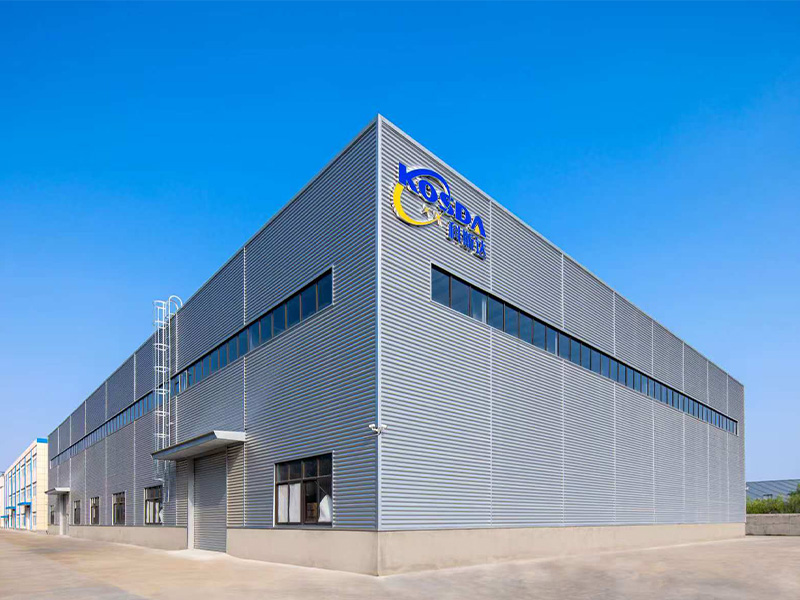
Ningbo Kosda New Material Technology Co., Ltd. was established in 2015 and is located in the Ningbo Binhai Economic Development Zone, China, which is the world's largest deep-water port in terms of throughput and a civilized city in China. It is a large modern production enterprise that integrates the design, research and development, production, and sales of paper products. The company adheres to the principle of quality development, advocates green and environmentally friendly products, and promotes the industrialization of high-tech. Starting from meeting customer needs, we provide high-quality and efficient services.
 Modern Green And Environmentally Friendly Paper Product Manufacturer
 -
Products

-
News




 English
 French
 Español
 German

Industry News
Benefits of Composting: Soil Health, Climate Action, and Smarter Food Service
Picture a mid-sized catering company that assembles four hundred boxed lunches every working day. By Friday, its kitchen bins are full of vegetable trimmings, coffee grounds, paper plates, and takeout containers, and the waste hauler charges extra for each additional pickup. A growing number of corporate clients now ask how the company manages food waste, and the marketing team wants a sustainability story that is easy to verify and hard to argue with. Composting is the process that resolves this pressure. It turns organic waste and certified compostable paper tableware into a dark, nutrient-rich soil amendment instead of letting those materials rot in a landfill.
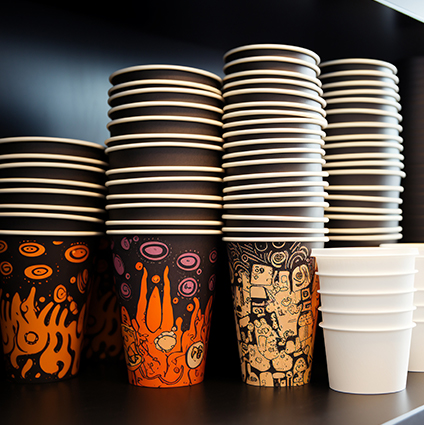
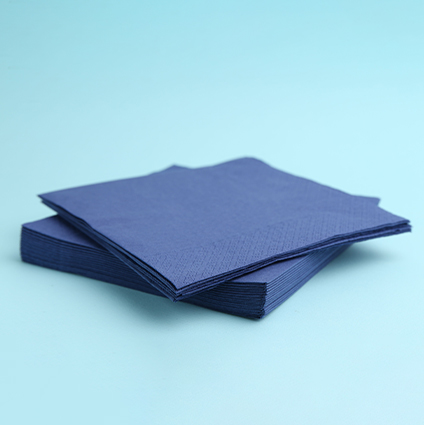
The benefits of composting extend far beyond the compost bin. Compost builds healthier soil, conserves water, reduces methane emissions, lowers disposal costs, and gives food-service brands, catering companies, event organizers, and retail chains a credible environmental story to tell with confidence. At Ningbo Kosda New Material Technology Co., Ltd., a manufacturer of compostable paper plates, cups, bowls, napkins, food containers, and tablecloths, we see buyers around the world use this logic to design better products and stronger supply chains. This article explains what the benefits of composting are, which ones matter most to a commercial buyer, and how choosing the right compostable tableware helps a business close the loop from kitchen to farm.
Content
- 1 What Are the Benefits of Composting for Soil, Water, and Climate?
- 2 How the Benefits of Composting Stack Up in Practice
- 3 Benefits of Composting for Business: Waste, Costs, and Brand Value
- 4 How Composting Works: Methods, Inputs, and Common Mistakes
- 5 Compostable Paper Tableware and Food Packaging: Closing the Loop
- 6 Choosing Compostable Tableware: Material, Certification, and Performance
- 7 Sourcing Compostable Tableware From a Manufacturer: What Buyers Should Verify
- 8 Partnering With a Compostable Tableware Manufacturer: A Win-Win Model
- 9 Frequently Asked Questions About the Benefits of Composting
- 9.1 What are the most important benefits of composting?
- 9.2 How does composting reduce greenhouse gas emissions?
- 9.3 Are compostable paper plates and cups actually compostable?
- 9.4 How long does it take for paper plates and bowls to decompose?
- 9.5 What is the difference between biodegradable and compostable?
- 9.6 Can a restaurant or catering business actually save money by composting?
What Are the Benefits of Composting for Soil, Water, and Climate?
Composting is a controlled aerobic process. Microorganisms break down food scraps, yard trimmings, shredded paper, and certified compostable paper tableware into humus, a stable form of organic matter. In a well-run pile, oxygen keeps the decomposition aerobic, temperatures climb into the thermophilic range, and the finished material is dark, crumbly, and free of unpleasant odors.
The most direct benefit of composting is soil health. Compost adds organic matter, which improves soil structure, increases porosity, and gives plant roots room to grow. It releases nitrogen, phosphorus, and potassium slowly, so plants receive steady nutrition rather than a spike that washes away. Compost also feeds bacteria, fungi, and earthworms, creating the biological activity that breaks down plant residues and suppresses common root diseases. For farms, landscapers, and urban gardens, healthy soil means fewer inputs and more consistent yields.
Water benefits follow naturally from better soil. Organic matter in compost acts like a sponge, allowing soil to absorb and hold moisture longer, which reduces irrigation demand and helps plants survive short dry periods. Compost slows surface runoff, preventing topsoil erosion and keeping sediment and nutrients out of local waterways. The same handful of compost therefore serves both the crop and the surrounding watershed.
The climate benefit is equally important, though less visible. Organic waste sent to a landfill decomposes without oxygen and produces methane, a greenhouse gas several times more potent than carbon dioxide over a twenty-year horizon. Composting keeps the same waste aerobic. Instead of producing methane underground, the material releases carbon through normal microbial activity and returns a portion of that carbon to the soil, where it can remain stable for years. Reducing waste, avoiding methane, and retaining soil carbon together form one of the most practical climate actions available to a business.
How the Benefits of Composting Stack Up in Practice
Measuring the benefits of composting across different regions and business models is rarely a clean exercise. Field trials differ in climate, feedstock, and soil type, so exact numbers vary widely from one study to another. Even so, researchers and compost operators consistently place the same impact areas at the top of the list. The chart below compares these benefits according to the strength and consistency of the evidence across agricultural, municipal, and commercial programs. It is a practical ranking rather than a precise scientific figure.
Relative strength of evidence and impact across the main benefits of composting
Starting at the top, soil health and fertility score highest in nearly every review of composting research. This benefit is also the most visible to the end user: a farmer spreads compost and sees better root development within a single season. Water retention and conservation follow closely, because organic matter in compost can hold several times its own weight in water. That single characteristic reduces irrigation demand and lowers the risk of damage from short dry spells. Landfill methane reduction ranks high for a different reason: prevention is far more effective than capture or treatment. Every tonne of food waste kept out of a landfill avoids a concentrated source of methane, which matters because methane traps heat far more effectively than carbon dioxide in the short term. Waste volume reduction is the benefit most municipal programs report first, simply because it is easy to measure at the scale of containers and collection routes. Carbon sequestration ranks lower here because not all compost carbon remains stable in soil for long periods, yet even moderate retention adds up when compost is applied across large farms and landscaping projects. The last bar, combined fertilizer and disposal cost savings, tends to be underestimated in public discussion. These savings are the benefit that speaks most directly to a commercial buyer: less tonnage to haul, fewer soil inputs to purchase, and a shorter waste loop overall. Taken together, the pattern is clear: the benefits of composting are strongest exactly where businesses and municipalities feel the pressure of waste and water.
Benefits of Composting for Business: Waste, Costs, and Brand Value
Commercial buyers sometimes assume that composting is a public-service activity with no direct financial logic. In reality, the benefits of composting for a business show up in at least four measurable places: waste hauling, compliance, purchasing, and brand reputation.
Waste hauling is the most obvious. Haulers charge by volume or by the number of container pulls, and organic waste is heavy and wet. When a restaurant, cafeteria, or catering kitchen separates food scraps and certified compostable paper products, the remaining trash is lighter and often smaller in volume, which can reduce collection frequency and monthly fees. In regions with organic waste diversion requirements, separating organics is also a compliance issue. Municipalities and states are expanding landfill restrictions, and a business that prepares early avoids fines and rushed process changes later.
Purchasing savings are less obvious but real. Finished compost is a substitute for fertilizer, soil conditioners, and mulch that a business buys for landscaping, urban gardens, greenhouse operations, or community projects. Instead of paying to throw organic material away and paying again for soil inputs, a business can capture both sides of the loop.
Brand reputation is the benefit that keeps growing. Corporate clients, local authorities, and end consumers now ask about waste handling before signing contracts. A café that can say its food scraps and compostable cups go to a regional composting facility has a concrete, verifiable story. That story supports B2B sales, tender responses, and public communication, and it is difficult for competitors to copy without the same operational discipline.
There is also a quieter benefit: employee engagement. Kitchen and serving staff who watch their own food waste become soil tend to sort more carefully, waste less, and take pride in the operation. Over time, that behavioral shift reduces contamination and improves the quality of the organics stream, which every composter treats as the single most important factor in running a profitable program.
How Composting Works: Methods, Inputs, and Common Mistakes
Composting works on a simple principle: balance carbon-rich "browns," nitrogen-rich "greens," water, and oxygen, and microorganisms do the rest. Browns include dry leaves, shredded paper, and cardboard. Greens include vegetable scraps, grass clippings, coffee grounds, and food-processing residues. The pile needs enough moisture to feel like a wrung-out sponge and enough aeration to prevent anaerobic conditions.
Different settings call for different methods. A backyard bin works for household and small café volumes. A passive pile requires little effort but takes months. Vermicomposting uses worms to process kitchen waste quickly in compact spaces. At commercial scale, windrow composting turns long rows of material with machinery, while in-vessel and aerated static pile systems give operators precise control over temperature and air, which is exactly what certified compostable tableware needs to break down quickly.
What goes into the system matters as much as the method. Paper-based food packaging can be composted when it carries third-party certification and does not contain conventional plastic liners. The table below summarizes common inputs and common mistakes.
| Good to compost | Compost with caution | Keep out of the compost |
|---|---|---|
| Fruit and vegetable scraps | Meat, bones, and dairy (industrial systems only) | Plastic-coated cups and containers |
| Coffee grounds and paper filters | Diseased plants (hot piles only) | Glass, metal, and synthetic textiles |
| Grass clippings and dry leaves | Weeds with seeds (hot composting preferred) | Pet waste |
| Shredded uncoated paper and paper towels | Greasy pizza boxes (use in moderation) | Glossy printed magazines |
| Certified compostable paper plates, cups, bowls, and napkins | PLA-lined cups (only with industrial compost certification) | Conventional plastic labeled "biodegradable" |
Maintenance is what separates a working pile from a smelly one. A simple weekly turning schedule keeps oxygen flowing, and moisture compaction can be checked by hand. If the pile smells like ammonia or rot, it is either too wet, too dense, or short on carbon-rich browns. Operators who monitor temperature and moisture in the early weeks avoid most problems later, because a balanced start produces stable decomposition that is less attractive to pests.
A common mistake is to assume that "biodegradable" and "compostable" mean the same thing. Biodegradable only describes a material that can be broken down by microorganisms over an unspecified time. Compostable is a defined standard: the product must disintegrate, mineralize, and leave no toxic residue within a specified period under controlled conditions. Buyers should always ask for certified compostable materials rather than accepting vague environmental labeling.
Compostable Paper Tableware and Food Packaging: Closing the Loop
For a food business, the practical challenge is sorting. If plates, cups, and napkins must be separated from food scraps, staff compliance drops and contamination rises. Certified compostable paper tableware solves this problem by design: the plate, bowl, cup, napkin, or takeout container can go into the same organics bin as the leftover food. The whole stream moves to a composting facility together, which is why compostable food-service packaging is one of the most effective ways to raise diversion rates in cafeterias, catering kitchens, event venues, and quick-service operations.
Industrial composting is the usual destination for these products. In a commercial facility, temperature, moisture, and aeration are controlled, and certified paper packaging typically breaks down in 60 to 180 days. Home compost systems are slower and cooler, so buyers should check whether a product is certified for home composting before recommending it to residential users. Standards such as EN 13432 and ASTM D6400 define the industrial conditions, while additional home-compost certifications cover backyard bins and vermicomposting systems.
The application scenarios for compostable foodservice packaging are broad:
- Quick-service restaurants and coffee chains that need on-the-go packaging
- Catering and boxed-lunch programs with high daily volume
- Corporate cafeterias and staff canteens with organics-separation goals
- Weddings, festivals, and corporate events with large single-day waste streams
- Bakeries and dessert shops using portion-controlled paper bowls and trays
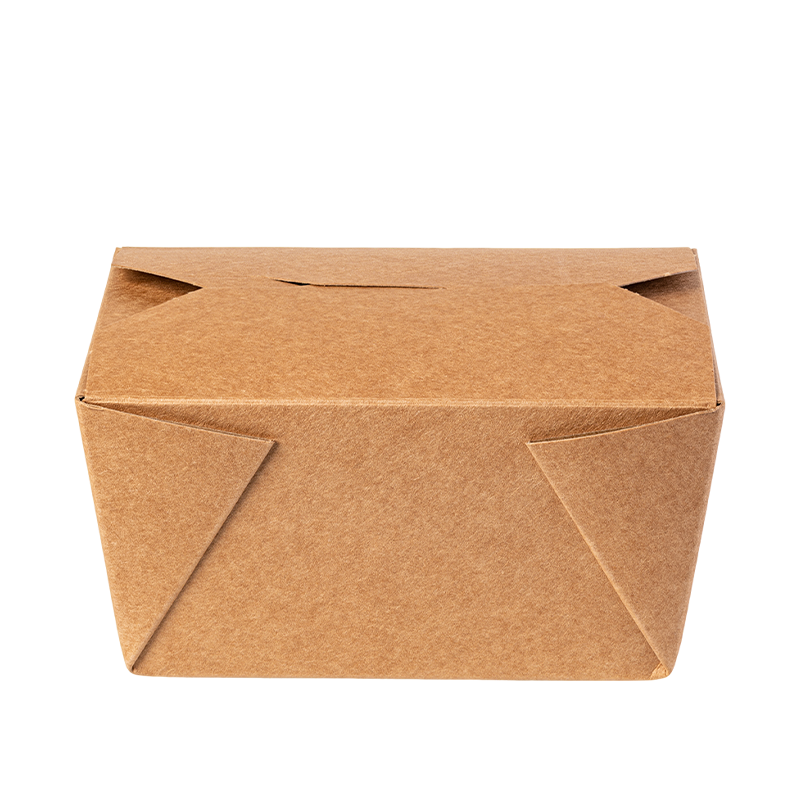 Kraft Takeout Container with Compostable Fiber ConstructionA sturdy, unbleached kraft container suited for hot meals and delivery. Its visible fiber and leakproof build make it practical for food trucks while supporting compostable waste goals.View Product →
Kraft takeout containers, for example, give a food truck or delivery kitchen a sturdy vessel for hot meals, and they look natural in a compost bin because the fiber is visible and unbleached. Square compostable plates offer portion control for catered events and tasting menus. Paper bowls with plant-based linings handle soups and desserts without leaving a plastic residue in the finished compost.
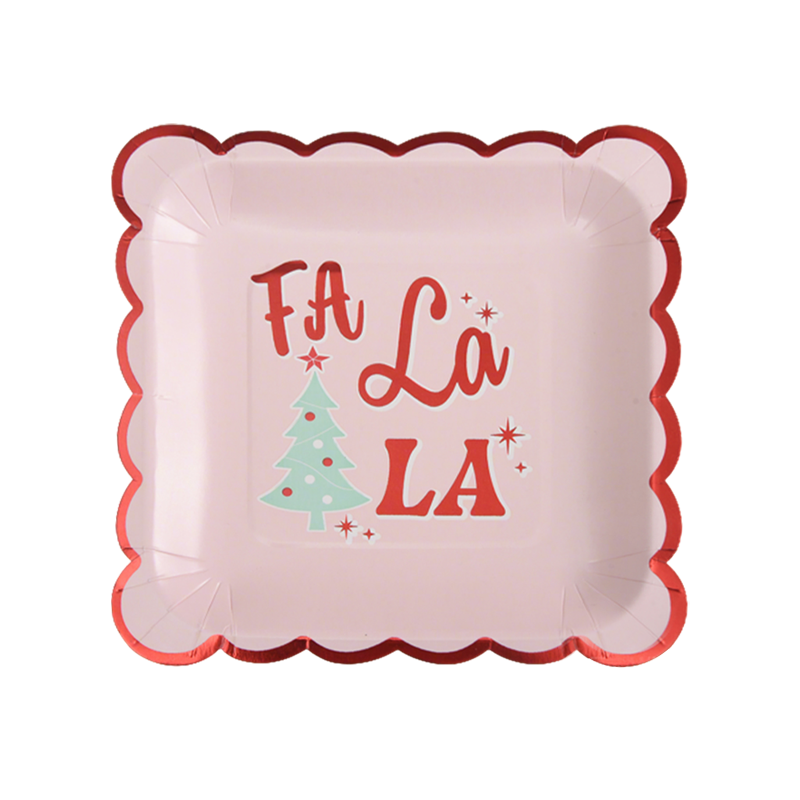 6-Inch Square Compostable Plate for Portion-Controlled CateringA thickened, customizable square plate designed for catered events and tasting menus. Its compostable material helps organizers report real diversion tonnage when paired with proper waste handling.View Product →
For a detailed overview of material choices, certifications, and procurement steps, see our buyer’s guide on sustainable food packaging. It walks through the questions a sourcing team should ask before committing to a supplier. Event organizers are adopting this model faster than most, because a single event produces thousands of organic containers within hours. When the plates, cups, and napkins are compostable and the waste hauler confirms the destination, the event can report actual diversion tonnage instead of vague promises.
Choosing Compostable Tableware: Material, Certification, and Performance
Not all compostable paper products perform the same way in the kitchen. The material determines how the item handles grease, heat, moisture, and cutlery, and it also affects how quickly the product breaks down in a composting facility. The comparison below covers the options most commonly used by restaurants, caterers, and event suppliers.
| Material | Compostability | Grease and moisture resistance | Best suited for |
|---|---|---|---|
| Kraft paper | Certified compostable options widely available | Good for dry and mildly moist foods | Desserts, bread, sandwiches, outdoor events, natural branding |
| White paper | Certified options available | Moderate; needs a coating for wet foods | Weddings, banquets, premium catering, clean aesthetics |
| Coated art paper | Only with certified plant-based coatings | High when coated with PLA or water-based barriers | Printed party plates, tablecloths, high-moisture takeout |
| PLA-lined paper cups and bowls | Only with industrial compost certification | High, designed for hot drinks and soups | Coffee cups, soup bowls, catering beverages |
Compartment trays and multi-size configurations make procurement easier for operators who serve variable menu sizes. The most useful configuration options for buyers are summarized below.
When evaluating a supplier, ask for the specific certification for each product rather than a general claim. A cup with a PLA lining requires different processing conditions than an uncoated fiber plate. Buyers should also test products with their own menu: a greasy sandwich, a hot soup, and a saucy pasta behave differently on paper surfaces, and real-world testing is faster and more reliable than reading data sheets.
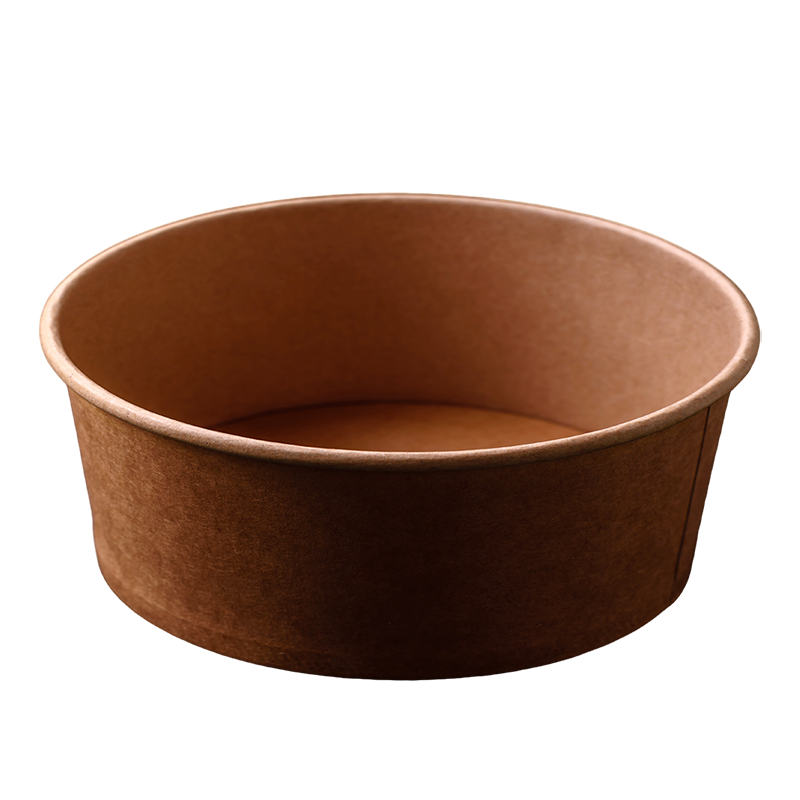 Compostable Kraft Dessert Bowl for Bakery and Catering UseA natural kraft bowl that holds sweet portions without extra packaging. Food-safe and moisture-resistant, it suits dessert counters and eco-friendly catering while returning nutrients to soil.View Product →
Kraft dessert bowls, for example, are a practical choice for bakery counters and dessert catering because they hold sweet portions without an extra clamshell. They demonstrate the same principle that drives the whole category: a disposable item that returns nutrients to soil, not litter to the landscape.
Sourcing Compostable Tableware From a Manufacturer: What Buyers Should Verify
Importers, distributors, and brand owners face a different set of questions than restaurant operators. When you source compostable tableware in bulk, the product must be consistent across containers, compliant with food-contact regulations in the destination market, and backed by documentation that your own customers will accept. A reliable manufacturer makes this process straightforward.
|
|
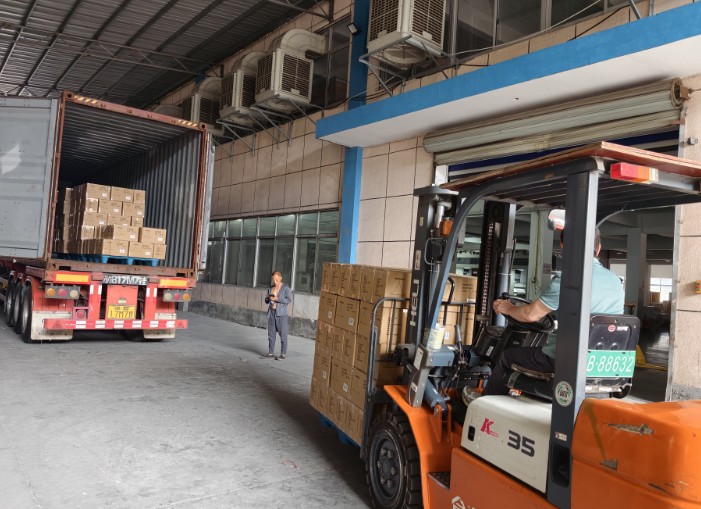
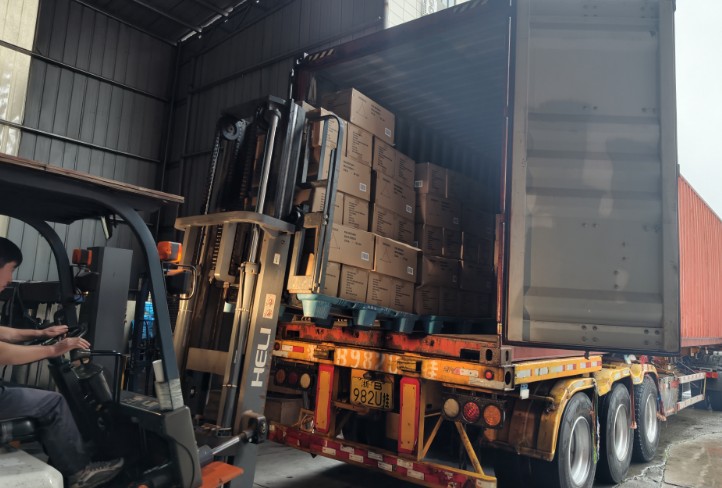
Kosda operates as a design and production facility in Ningbo, close to one of the busiest deep-water ports in the world. We handle custom colors, custom image and text printing, and OEM development across paper plates, cups, bowls, napkins, food containers, wrapping paper, and tablecloths. Export shipments move through established logistics channels, and wholesale customers benefit from coordinated loading, documentation, and scheduling that keep container timetables predictable.
For a category as young as compostable tableware, documentation separates real performance from marketing language. Buyers should request certificates, test reports, and material declarations before mass production. A supplier that cannot provide these documents has not yet built the quality system the category demands. In addition, prudent buyers ask about production capacity and busy-season lead times, because compostable packaging demand spikes around holidays and large event seasons.
Partnering With a Compostable Tableware Manufacturer: A Win-Win Model
Kosda was founded in 2015 in the Ningbo Binhai Economic Development Zone. The company positions itself as a modern manufacturer that combines design, research and development, production, and sales under one roof, with a focus on quality, green materials, and high-technology processes. For a factory of this kind, the relationship with a buyer is not a one-way transaction. It is a partnership where each side brings capabilities that the other side needs.
Buyers bring market knowledge: which products sell in their region, which certifications their customers require, and which price points fit their distribution network. The factory brings production depth: tooling, material sourcing, printing, quality control, and export logistics. When these two meet, the result is a product that fits a specific market instead of a generic catalog item. This is the core of a win-win cooperation model. The manufacturer wins because it receives stable, repeatable orders and clear technical requirements. The buyer wins because it gains a supplier that can adapt designs, control quality, and ship reliably without the buyer building its own factory.
This model matters for sustainability claims as well. A compostable cup or plate only delivers its environmental benefit if it is produced from the right pulp, processed with the right coating, and certified by a credible standard. A manufacturer that controls the full production line can stand behind those specifications. That is why we encourage buyers to visit, request samples, and review quality documentation early. The conversations are usually technical, and that technical clarity saves both sides from surprises later.
If you are evaluating suppliers for compostable paper plates, cups, bowls, napkins, or custom food packaging, contact our export team to discuss specifications, samples, and shipping schedules.
Frequently Asked Questions About the Benefits of Composting
What are the most important benefits of composting?
The benefits of composting that matter most in practice are soil health improvement, water retention, methane emission prevention, waste volume reduction, and cost savings. For commercial buyers, waste-handling costs and regulatory compliance often rank as the most urgent benefits, while soil and climate benefits strengthen the long-term sustainability story.
How does composting reduce greenhouse gas emissions?
Landfills receive organic waste that decomposes without oxygen and releases methane, a powerful greenhouse gas. Composting keeps the material aerobic, so decomposition produces mostly carbon dioxide through normal microbial respiration, which has a far lower warming effect. A portion of the carbon is also retained in the finished compost and can stay stable in soil for years, which further reduces the net climate impact.
Are compostable paper plates and cups actually compostable?
Only when they are certified as compostable and processed in a facility that matches the certification conditions. Industrial compostable products require controlled temperature and moisture, which is why they are designed for commercial composting operations. Products certified for home composting can break down in a backyard pile. Without certification, a paper plate should be treated as recyclable or general waste, not compost.
How long does it take for paper plates and bowls to decompose?
In an industrial composting facility, certified paper plates, bowls, and cups typically disintegrate within 60 to 180 days, depending on the thickness of the fiber and the coating. Home compost systems are cooler and slower, so breakdown can take several months or longer. The certification standard defines the maximum time, and a reputable supplier will state the exact conditions alongside the certification mark.
What is the difference between biodegradable and compostable?
Biodegradable only means that a material can be broken down by microorganisms at some point, with no time limit and no requirement about toxic residue. Compostable is a defined performance standard: the product must disintegrate, break down into carbon dioxide and biomass, and leave no harmful residue within a specified period under specific conditions. Buyers should always search for certified compostable products and avoid unverifiable "biodegradable" claims.
Can a restaurant or catering business actually save money by composting?
Yes, in most cases, once the program is planned properly. Reduced waste-hauling volume, lower disposal frequency, avoided fines in regulated regions, and reduced purchases of soil amendments can offset the cost of collection and processing. The savings vary by region, hauler rates, and waste volume, so a quick audit of the current waste bill is the best first step for any operator.
The benefits of composting are not abstract environmental talking points. They show up in soil that holds water, in landfill bills that shrink, in methane that never reaches the atmosphere, and in a brand story that is easy to prove. For a business, the fastest way to take part in this system is to ensure that the foodware used on site is truly compostable, sorted correctly, and sent to a facility that can process it.
That is the role Kosda plays for its partners. As a manufacturer of compostable paper plates, cups, bowls, napkins, food containers, wrapping paper, and tablecloths, we combine certified materials, OEM flexibility, and export experience to help importers, distributors, and brands build products that close the loop. The cooperative model is simple: your market knowledge plus our production system equals a product line your customers can trust.
Your email address will not be published. Required fields are marked *


-
Modern Green And Environmentally Friendly Paper Product Manufacturer
-
Quick Links
Home About Us Products News Contact Us -
Product Categories
Paper Plates Paper Cup Paper Napkin Paper Food Container Disposable Paper Tablecloth Wrapping Paper Roll Paper Cutlery -
Contact Us
 Tel: +86-13967818265
0086-13646629749 E-mail: [email protected]
E-mail: [email protected]
E-mail: [email protected]
E-mail: [email protected]
 Whatsapp: 008613646629749
 Add: 1036 Cidong Avenue, Binhai Economic Development Zone, Ningbo City, Zhejiang Province, China
