
-
About Us
Why Choose Us?
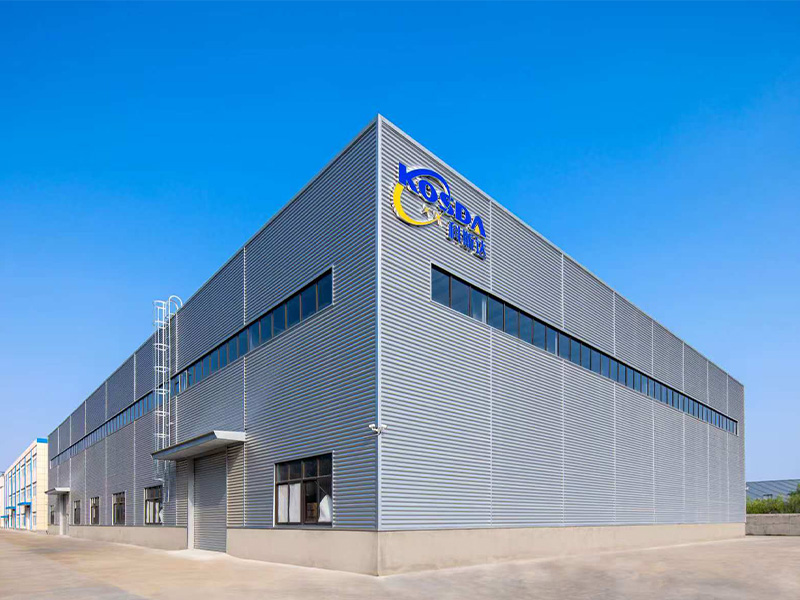
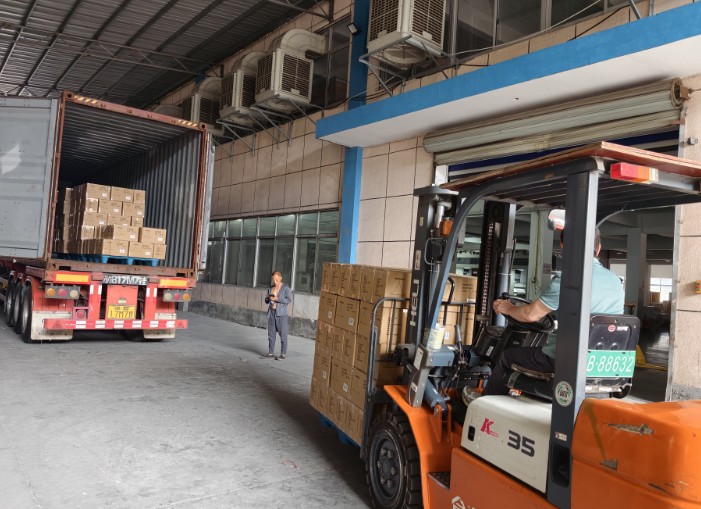
Ningbo Kosda New Material Technology Co., Ltd. was established in 2015 and is located in the Ningbo Binhai Economic Development Zone, China, which is the world's largest deep-water port in terms of throughput and a civilized city in China. It is a large modern production enterprise that integrates the design, research and development, production, and sales of paper products. The company adheres to the principle of quality development, advocates green and environmentally friendly products, and promotes the industrialization of high-tech. Starting from meeting customer needs, we provide high-quality and efficient services.
 Modern Green And Environmentally Friendly Paper Product Manufacturer
 -
Products

-
News




 English
 French
 Español
 German

Industry News
Commercial Composting and Compostable Paper Tableware: A B2B Sourcing Guide
Commercial composting is the half of a compostable tableware decision that most B2B buyers only discover after the purchase order is already signed. A restaurant group switches to uncoated kraft plates. A festival orders compostable snack cups. A hospitality operator specifies PLA-lined paper cups. Then somebody reads the waste contractor's acceptance list and finds that the local site runs open windrows and will not take food-soiled fibre at all. The custom paper plate manufacturer did its job. The infrastructure did not. Closing that gap is exactly what commercial composting know-how is for.
Here is the conclusion first, before the explanation: commercial composting only delivers a real environmental result when three things line up. You need a facility that can hold 55 to 65 degrees Celsius for several weeks, tableware and packaging that carries a recognised industrial compostability certificate rather than a vague "eco" label, and a collection routine that keeps the compostable stream clean enough for the site to accept it. Get all three right and paper plates, kraft bowls, paper cups, napkins and food containers become a genuine closed-loop story you can show to clients, auditors and tender committees. Get one wrong and the premium you paid for compostable material buys nothing at all.
The rest of this page walks through how commercial composting works, what it accepts, where coated and uncoated paper behave very differently, what to verify before you place an order, and how a paper tableware factory fits into that chain.
Compostable tableware only pays off when material, certification and collection route all match — never assume the third one.
Content
- 1 What Commercial Composting Actually Is
- 2 Home Composting vs Commercial Composting: A Distinction Buyers Cannot Blur
- 3 How Compostable Paper Tableware Behaves Inside a Commercial Composting Facility
- 4 Certifications and Standards That Actually Decide Acceptance
- 5 Common Types of Compostable Paper Tableware and Their Characteristics
- 6 What to Verify Before You Place an Order With a Paper Tableware Factory
- 7 Running the Programme: Maintenance and Day-to-Day Discipline
- 8 Working With Kosda: Partnership Rather Than a Transaction
- 9 FAQ: Commercial Composting Questions Buyers Ask Most
- 9.1 Is commercial composting the same as industrial composting?
- 9.2 Can uncoated paper plates really go into commercial composting?
- 9.3 What is the difference between commercially compostable and home compostable?
- 9.4 What if there is no commercial composting facility in my area?
- 9.5 Are PLA-lined paper cups accepted in commercial composting?
- 9.6 Do composting facilities accept food-soiled tableware?
- 9.7 How does a paper tableware factory prove a product is compostable?
- 9.8 Does custom printing affect compostability?
What Commercial Composting Actually Is
Commercial composting is the controlled biological decomposition of organic waste at industrial scale. It is not a larger version of a garden bin. It is a managed process with forced aeration, temperature probes, moisture control and material handling equipment. It exists because food waste sent to landfill generates methane, while food waste processed through a well-run composting facility produces a stable soil amendment instead.
The process runs on a small number of variables, and every one of them has a direct effect on whether your tableware breaks down inside the operator's window.
- Temperature. The thermophilic phase sits between 55 and 65 degrees Celsius and must be held for several consecutive days. This is what destroys pathogens and weed seeds, and what drives the breakdown of tough fibres such as kraft board.
- Oxygen. Static piles and windrows are turned on a schedule; in-vessel and aerated static pile systems use blowers. Anaerobic pockets smell, slow the process and release methane, so airflow is not optional.
- Moisture. The target is roughly 50 to 60 percent. Too dry and microbial activity stalls. Too wet and the pile turns anaerobic.
- Carbon-to-nitrogen ratio. A starting ratio around 25:1 to 30:1 keeps the biology balanced. Food waste is nitrogen-heavy, so bulking agents such as shredded paper, wood chips and dry fibre are added.
- Particle size. Smaller pieces expose more surface area. A paper plate that survives for weeks is not resisting decomposition on purpose — it is simply too thick, too coated or too compressed for the residence time the operator runs.
- Residence time. Depending on the system, active composting runs from roughly four weeks to sixteen weeks, followed by curing and screening.
The main system types are turned windrows, aerated static piles, in-vessel tunnels and containers, and anaerobic digestion. Anaerobic digestion is technically a different process, but it is frequently grouped under the same commercial organics banner because it accepts the same feedstock.
What comes out the far end has a market. Screened compost goes to landscaping, turf, erosion control and agriculture, which closes the loop and gives facility operators a commercial reason to keep accepting material. That economic logic explains why acceptance rules are strict: a composting site cannot absorb contamination, so it will reject a whole load that contains plastic.
Commercial composting is a controlled industrial process with hard acceptance limits, not an informal waste route — treat its rules the way you would treat any other specification.
Home Composting vs Commercial Composting: A Distinction Buyers Cannot Blur
Suppliers frequently describe a product as "compostable" without saying which composting environment they mean. That single omission causes most of the disputes between buyers and their waste contractors. Home compost conditions are cool, slow, small in volume and inconsistent. Commercial conditions are hot, fast, monitored and rule-bound. A material that performs well in one can fail completely in the other, and the failure is invisible until the load is rejected.
| Variable | Home composting | Commercial composting |
|---|---|---|
| Peak temperature | Rarely above 40 degrees Celsius | 55 to 65 degrees Celsius, held for days |
| Typical cycle | Six to twelve months | Four to sixteen weeks plus curing |
| Throughput | Household scale, a few kilograms a week | Tonnes per day, incoming material screened |
| Accepted inputs | Garden waste, vegetable scraps, some certified home-compostable items | Food waste, food-soiled fibre, certified industrial-compostable packaging |
| Certification used | TÜV OK Compost HOME, AS 5810 | EN 13432, ASTM D6400, AS 4736, TÜV OK Compost INDUSTRIAL, BPI |
| Main buyer risk | Product marked industrial-only never breaks down in the garden | Product without industrial certification is rejected at the gate |
For a procurement team the second column is the one that matters. If your operation generates food-soiled tableware at volume, and the waste contract routes it to a commercial facility, then the specification you need is industrial compostability, documented per item. Home-compostable claims look attractive on a marketing slide but they do not satisfy a facility that is running a thermophilic process with a defined retention time.
Match the certification to the destination facility, not to the label that sounds best on the packaging.
How Compostable Paper Tableware Behaves Inside a Commercial Composting Facility
Buyers usually ask for a single number: how long does it take. That question has no clean answer, because breakdown speed depends on thickness, coating chemistry, fibre type, print coverage and how the item was formed. A more useful question is whether the item will clear the operator's retention window at all, because anything that leaves the tunnel still recognisable goes to screening residue and is treated as contamination. The chart below sets out typical industrial decomposition ranges for the paper and moulded-fibre items that appear most often in food service and event catering.
The ranges assume a well-managed thermophilic process running between 55 and 65 degrees Celsius with regular turning or forced aeration. They assume the item is shredded or at least broken into pieces when it enters the pile. And they assume the item carries a valid industrial compostability certificate, which is the condition that makes everything else meaningful. Materials that carry no such certificate are not shown on the same scale because they never fully decompose in that environment.
The comparison is not intended as a ranking of quality. A slower-decomposing item is not automatically worse — it may simply be stronger, more water-resistant or more suitable for hot food, which is a legitimate design trade-off. The point is to know in advance which end of the range you are buying into, and to confirm that your waste contractor's cycle is long enough to absorb it.
| Uncoated tissue napkin | 3–5 weeks | |
| Uncoated kraft paper plate | 6–10 weeks | |
| Kraft food container or bowl | 8–12 weeks | |
| Moulded bamboo or bagasse plate | 10–12 weeks | |
| PLA-lined paper cup | 12–16 weeks | |
| PE-lined paper cup or PP cutlery | Never fully breaks down |
The pattern in the chart is straightforward once you read it against the process variables described earlier. Uncoated tissue napkins sit at the fast end because they are thin, loosely formed and free of any barrier layer, so moisture and heat reach the fibre almost immediately. Moving down, kraft paper plates slow down as basis weight increases — the material is still uncoated, but there is simply more of it to break down.
Kraft food containers and bowls sit a step further along because they are formed from heavier board and often have a folded or rolled rim that packs the fibre more densely. Moulded bamboo and bagasse plates land in a similar band, which surprises some buyers. Moulded fibre is marketed as an obvious compostable choice and it is, but the pressing process creates a dense, rigid structure that takes longer to hydrate than a flat sheet of the same material.
The PLA-lined paper cup is the item that most often causes friction between buyers and waste contractors. PLA is a certified industrial-compostable bioplastic, and a cup lined with it will break down — but the lining has to hydrolyse before the paper can go, which is why the range stretches to sixteen weeks. That is comfortably inside the capability of a modern in-vessel facility and well outside the capability of a small windrow site running a four-week cycle.
The grey bar at the bottom is the one that ends contracts. Polyethylene-lined cups and polypropylene cutlery do not fully decompose under any realistic composting timeline. They fragment, they contaminate the finished compost, and they are the single most common reason a site rejects a load. If your operation mixes PE-lined cups into a compostable stream, the whole stream is at risk regardless of how good the rest of the specification is.
Two practical conclusions follow. First, the difference between six weeks and sixteen weeks matters far less than the difference between sixteen weeks and never. Sorting for certified industrial compostability removes the catastrophic case and leaves you with a manageable range. Second, once you are inside that range, the facility's cycle length becomes the deciding factor. Ask the operator for their retention time before you finalise the specification, not after.
The gap between sixteen weeks and never is the only gap that ends a composting programme — everything inside the certified range is a scheduling question.
Certifications and Standards That Actually Decide Acceptance
Three words get used interchangeably in supplier catalogues and they should not be. "Biodegradable" means the material will eventually break down under some conditions, with no timeline and no threshold. "Compostable" means it breaks down within a defined timeframe under defined conditions and leaves no toxic residue. "Home compostable" narrows that to a cool, low-volume environment. Only the last two are useful to a buyer, and only industrial compostability satisfies a commercial facility.
The standards that matter in practice are these.
- EN 13432 — the European reference for industrially compostable packaging. It sets requirements for disintegration, biodegradation, ecotoxicity and heavy metals.
- ASTM D6400 — the United States equivalent, widely referenced by North American waste haulers.
- AS 4736 — the Australian standard for industrial composting, paired with AS 5810 for home composting.
- ISO 17088 — the international specification for compostable plastics, used where regional standards are not the primary reference.
- TÜV OK Compost INDUSTRIAL and the Seedling mark — certification schemes that issue per-product certificates rather than per-company statements.
- BPI certification — the US-based programme that many municipal and commercial facilities recognise directly.
The distinction that catches buyers out most often is the certificate format. A company-level certificate tells you that a manufacturing site has a quality system in place. A product-level certificate tells you that a specific item, at a specific thickness, with a specific coating, passed a specific test protocol. Composting facility operators generally want the second kind, because that is the one that lets them defend an acceptance decision.
When you request documentation from a paper cup manufacturer or a party napkin manufacturer, ask for the certificate that names the exact SKU or the exact material construction. If the supplier can only produce a generic company brochure, treat the compostability claim as unverified.
Ask for the certificate that names the specific item, not the one that names the company.
Common Types of Compostable Paper Tableware and Their Characteristics
Compostable food-service ranges are usually built from a small number of material families. Each family has a different behaviour profile inside a commercial facility, and each one suits a different part of the service day. Scroll across the cards below to see how the main types compare.
-
Uncoated kraft paper plates
The fastest-decomposing rigid item in most ranges. No barrier layer, so heat and moisture reach the fibre immediately. Best for dry and semi-dry foods. A custom paper plate manufacturer can adjust diameter, rim style and embossing without changing the base material.
-
Moulded bamboo and bagasse plates
Dense pressed fibre with good rigidity and heat tolerance. Slower to hydrate than flat paper, so they sit in the middle of the decomposition range. A custom dinner plate factory typically offers these alongside paper formats for operators who need a stiffer plate.
-
PLA-lined paper cups
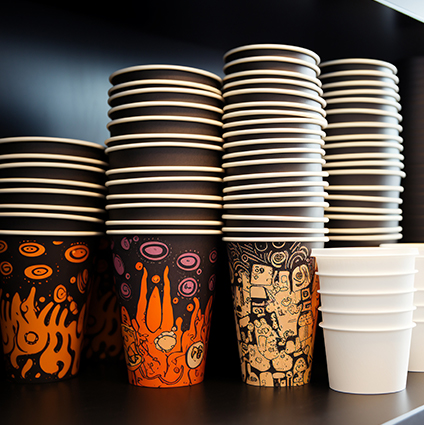
Certified industrial compostable, watertight and suitable for hot drinks. The lining hydrolyses before the paper breaks down, which pushes the range out to twelve to sixteen weeks. This is the format to specify when you need a custom paper cup that survives a full service period.
-
Kraft bowls and dessert bowls
Heavier board with a rolled rim. Common for desserts, snacks and small portions. A custom snack cup manufacturer usually produces these in the same tooling family as plates, which keeps MOQs and lead times predictable.
-
Paper napkins
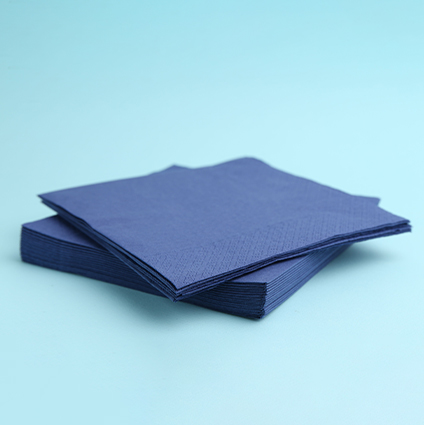
The simplest item in any compostable programme. Uncoated tissue breaks down within three to five weeks. A party napkin manufacturer can supply plain, monogrammed or fully printed formats; an OEM paper napkin programme usually starts at a lower MOQ than rigid items.
-
Kraft food containers
Takeout boxes and trays built from heavier kraft board. They handle oil and moisture reasonably well without a plastic film, which is why they feature heavily in compostable delivery programmes.
-
Gift wrap and party paper
Uncoated wrapping paper is fully compostable, but foil, glitter and heavy laminates are not. A gift wrapping paper manufacturer that understands this distinction can build a compostable gift wrap range with water-based inks and no metallic finishes. Custom party goods gift wrap often needs this specification in writing.
-
Paper tablecloths
Single-use coated or uncoated tablecloth rolls. Uncoated pure white and kraft versions compost cleanly; heavy pattern coatings need checking against the same standard as cups.
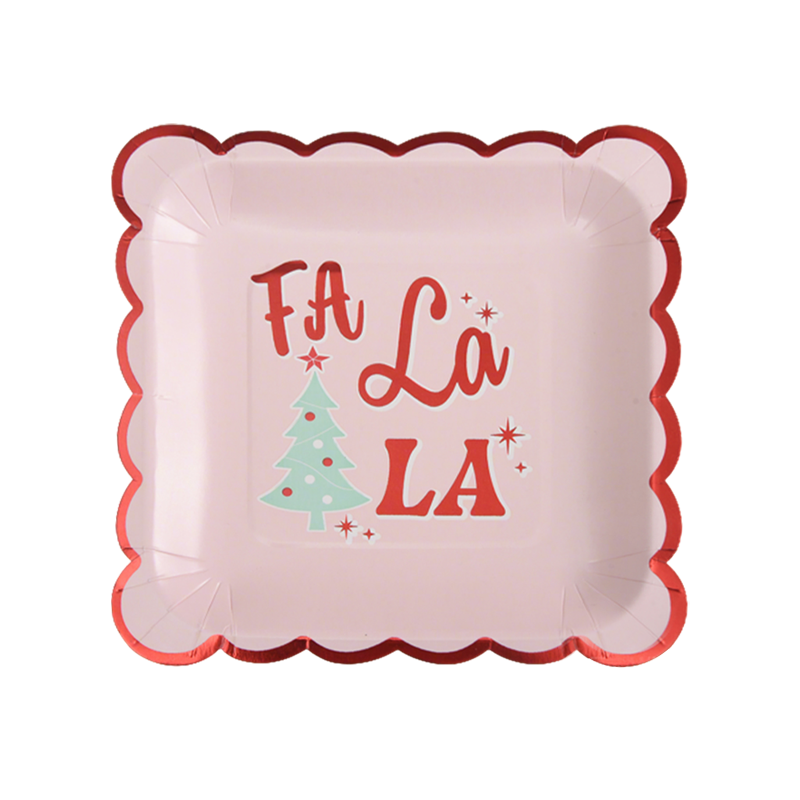
Compressed reference: material family versus operational fit
The table below condenses the same material families into the two decisions that matter most during specification — where the item is used, and what has to be verified before it is approved.
| Application scenario | Selection checks to complete first |
|---|---|
| Festival and large-scale event catering | Certification per SKU, rim rigidity under load, print ink chemistry, volume MOQ, and a documented route to the receiving facility. An OEM festival paper plate manufacturer should be able to run seasonal artwork without changing the base material. |
| Quick-service restaurant and takeaway | Grease resistance without a plastic film, lid fit, stack height for storage, and how the container behaves when food is still hot at the moment of disposal. |
| Coffee shops and bakery counters | Lining type (PLA versus PE), hot-liquid tolerance, sleeve compatibility and the decomposition range against the facility's cycle length. |
| Hotel banqueting and weddings | Surface finish, colour consistency across repeat orders, and whether the decorative elements — foil edges, glitter, laminated patterns — are compatible with composting at all. |
| Corporate cafeterias and office campuses | Signage-compatible bin systems, staff training material, contamination rate tracking and a supplier who can provide certificates for every item on the tray. |
| Gift retail and brand packaging | Ink type, absence of metallic or foil finishes, roll width, and whether the wrap is coated with anything that would block fibre breakdown. |
Two of these checks are consistently underweighted. The first is ink chemistry: water-based inks are widely compatible with composting, while metallic and solvent-heavy finishes are not, and this applies as much to a printed napkin as to a printed gift wrap. The second is repeat-order consistency. A compostable range only works if every subsequent shipment behaves like the sample that was tested, which puts the burden on the manufacturer's tooling and quality control rather than on the buyer's goodwill.
Decorative finishes and repeat-order consistency are the two specification items most often missed, and both can invalidate an otherwise correct compostable range.
What to Verify Before You Place an Order With a Paper Tableware Factory
Most compostable tableware failures originate at the sourcing stage, not at the waste facility. The questions below are the ones that separate a supplier who can support a composting programme from one who can only ship cartons.
- Product-level certificates. Request the document that names the SKU or the exact material construction. Cross-check the certificate holder, the issuing body and the expiry date.
- Lining specification. PLA, water-based dispersion and PE are three different products with three different end-of-life outcomes. Ask for the lining in writing and confirm it appears on the certificate.
- Basis weight and thickness. Grammage determines both rigidity and decomposition speed. A 300 gsm plate and a 200 gsm plate will not behave the same way in the same facility.
- Heat and grease performance. Confirm the maximum continuous temperature and the grease resistance rating, especially for containers intended for hot takeaway food.
- Ink and coating chemistry. Water-based inks for exterior print; no foil, no glitter, no metallic lamination on items destined for the compostable stream.
- Tooling and MOQ. Custom dies carry a one-time cost. Confirm whether it is amortised into unit price, charged separately, or waived above a volume threshold, and confirm how long the tooling is held for repeat orders.
- Lead time and export documentation. For importers, confirm production lead time, carton dimensions, pallet configuration and the export paperwork the factory can prepare.
- Sample testing. Order production-representative samples and, if possible, send them to the receiving composting facility for a trial before committing to a container load.
An OEM paper plate manufacturer or paper cup manufacturer who welcomes this level of questioning is usually the one worth building a long-term relationship with. The suppliers who resist it are telling you something useful about their documentation.

Running the Programme: Maintenance and Day-to-Day Discipline
Once the specification is correct, the remaining risk sits with operational discipline. Composting programmes fail on contamination far more often than they fail on material choice. The steps below are the ones that keep a commercial composting stream acceptable to the receiving facility.
- Put the collection point where the waste is generated, not where it is convenient to empty. A bin at the kitchen exit collects what people carry out; a bin at the tray-return station collects what actually gets left on the plate.
- Use unambiguous signage with physical examples. A labelled photo of the cups, plates, napkins and containers in current use removes more doubt than any wording.
- Keep liners consistent. Compostable bin liners must match the certification of the tableware. Mixing a compostable liner with a PE liner in the same stream defeats the purpose.
- Train new staff before their first shift, and refresh quarterly. Contamination rates rise when agency staff or seasonal hires are introduced without briefing.
- Audit the stream weekly for the first quarter. Open a bag, sort the contents, and record the contamination percentage. Early data identifies which station is failing.
- Track weight diverted, not just weight collected. Facilities issue weight tickets; use them to report progress internally and to clients.
- Review the certificate set annually. Standards are revised and certifications expire. A range that was compliant two years ago may need re-documentation.
- Feed results back to the supplier. If a particular item consistently causes problems, that is a product design conversation, and a manufacturing partner who values the relationship will take it seriously.
Contamination is an operational problem, not a material problem — a correct specification with poor bin placement still fails.
Working With Kosda: Partnership Rather Than a Transaction
Kosda is a B2B paper tableware factory based in Ningbo, China, producing paper plates, cups, bowls, napkins, food containers, wrapping paper rolls and disposable tablecloths for importers, distributors, catering groups and event suppliers. The business is built on the idea that a supply relationship should be a shared project: the buyer brings market knowledge and volume, the factory brings tooling, material sourcing and production discipline, and both sides invest in the result.
That model shows up in practical ways. Custom colours, custom shapes and custom printed artwork are standard capabilities rather than exceptions. Tooling for a new plate diameter or a new cup size is developed with the buyer instead of being pushed back onto them. Certification documentation is prepared per item so that a composting programme can be defended to a waste contractor. And when a specification changes — a different lining, a heavier board, a new rim profile — the factory works through the trial with the customer rather than quoting and disappearing.
| Transactional buying | Partnership buying |
|---|---|
| Off-the-shelf specification, lowest quoted unit price | Specification built around the destination facility and the certification it accepts |
| Generic company certificate supplied on request | Product-level certificate supplied per SKU, with periodic refreshes |
| Tooling cost pushed entirely onto the buyer | Tooling investment shared against committed volume |
| New artwork handled as an exception | New artwork treated as a normal production run |
| Relationship ends when the container ships | Relationship continues through repeat orders, redesigns and market changes |
If you are evaluating suppliers for a compostable range, the starting point is a specification conversation. Reach out through the contact page with your target market, the receiving composting facility if one is already identified, and the item list you need. And if you want a longer background read on how food packaging claims should be assessed before purchase, the buyer's guide to sustainable food packaging covers the claim-checking process in more detail.
A compostable range is a joint project between buyer and factory — the specification is where the partnership either starts or stalls.
FAQ: Commercial Composting Questions Buyers Ask Most
Is commercial composting the same as industrial composting?Yes in practice. Both terms describe the same large-scale, temperature-controlled process. "Industrial composting" is more common in standards language such as EN 13432, while "commercial composting" is more common in facility and waste-hauling language. If a supplier mentions one and your documents mention the other, they are referring to the same acceptance environment. |
Can uncoated paper plates really go into commercial composting?Yes, and they are among the fastest items to break down. Uncoated kraft and uncoated white board contain no barrier layer, so heat and moisture reach the fibre quickly. Typical industrial decomposition ranges from six to ten weeks, depending on basis weight and whether the plate is shredded before entering the pile. |
What is the difference between commercially compostable and home compostable?Commercially compostable items are certified to break down under sustained thermophilic conditions around 55 to 65 degrees Celsius within a defined timeframe. Home compostable items are certified to break down in a cool, low-volume garden environment over a longer period. An industrial-only item placed in a home bin will typically not break down in a reasonable time, and a home-compostable item may still meet industrial requirements — but only if it holds both certificates. |
What if there is no commercial composting facility in my area?Then the compostability of the tableware is a claim without an end destination, and paying a premium for it is hard to justify. In that situation the more honest sustainability positioning is usually reduced material weight, recycled fibre content, or a switch to reusable service ware. Compostable products only close the loop where a facility accepts them. |
Are PLA-lined paper cups accepted in commercial composting?Cups lined with certified industrial-compostable PLA are accepted by facilities that recognise EN 13432, ASTM D6400 or equivalent. Decomposition runs roughly twelve to sixteen weeks because the lining has to hydrolyse before the paper fibre can break down. Cups lined with polyethylene are not compostable and will cause load rejection if they enter the stream. |
Do composting facilities accept food-soiled tableware?Most do, and food residue is in fact the feedstock the process is designed for. The limit is contamination by non-compostable material — plastic cutlery, PE-lined cups, foil wrappers, laminated gift wrap — not by food itself. Some facilities impose limits on the proportion of non-food material in a load, so check their acceptance policy before finalising your item list. |
How does a paper tableware factory prove a product is compostable?Through a product-level certificate issued by a recognised body, naming the specific item or material construction and referencing the applicable standard. Company-level certificates and self-declared claims are not sufficient for facility acceptance. When sourcing, ask for the document that names the SKU. |
Does custom printing affect compostability?It can. Water-based inks are widely compatible with commercial composting. Metallic inks, foil stamping, glitter finishes and heavy laminates are not, and they will also contaminate the finished compost. If your artwork requires any of these effects, that item should be excluded from the compostable stream and routed to general waste instead. |
Every compostable claim should be traceable to a named product and a named standard — anything less is marketing, not specification.
Commercial composting rewards buyers who plan backwards from the facility rather than forwards from the catalogue. Start with the receiving site, confirm its cycle length and its acceptance policy, then specify items that carry the right product-level certification for that environment. Only then does the choice between an uncoated kraft plate, a moulded fibre plate or a PLA-lined cup become a meaningful decision rather than a cosmetic one.
The manufacturing side of that equation is the easier half to solve, provided you work with a partner who is willing to supply documentation per item, develop tooling around your specification and stay engaged through repeat orders. That is the model Kosda operates on, and it is the reason the company treats compostable tableware programmes as long-term collaborations rather than one-off shipments.
Your email address will not be published. Required fields are marked *





-
Modern Green And Environmentally Friendly Paper Product Manufacturer
-
Quick Links
Home About Us Products News Contact Us -
Product Categories
Paper Plates Paper Cup Paper Napkin Paper Food Container Disposable Paper Tablecloth Wrapping Paper Roll Paper Cutlery -
Contact Us
 Tel: +86-13967818265
0086-13646629749 E-mail: [email protected]
E-mail: [email protected]
E-mail: [email protected]
E-mail: [email protected]
 Whatsapp: 008613646629749
 Add: 1036 Cidong Avenue, Binhai Economic Development Zone, Ningbo City, Zhejiang Province, China
