
-
About Us
Why Choose Us?
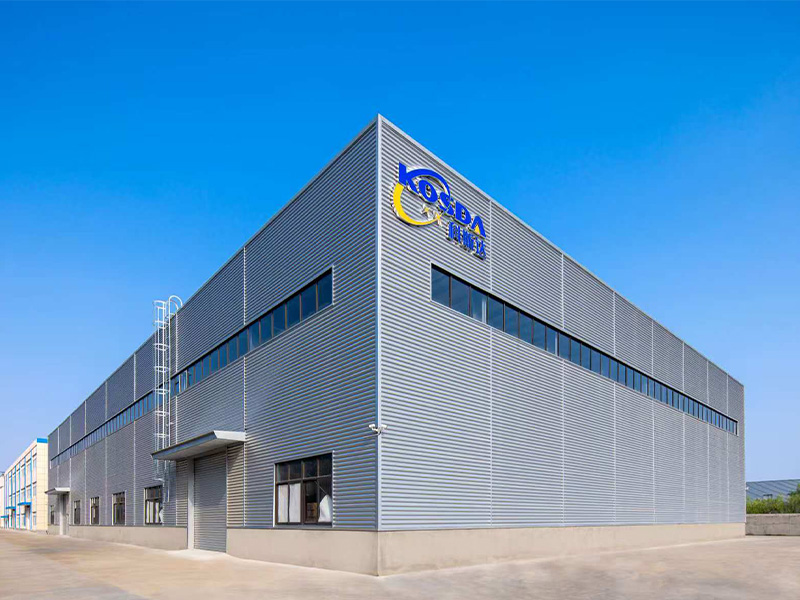
Ningbo Kosda New Material Technology Co., Ltd. was established in 2015 and is located in the Ningbo Binhai Economic Development Zone, China, which is the world's largest deep-water port in terms of throughput and a civilized city in China. It is a large modern production enterprise that integrates the design, research and development, production, and sales of paper products. The company adheres to the principle of quality development, advocates green and environmentally friendly products, and promotes the industrialization of high-tech. Starting from meeting customer needs, we provide high-quality and efficient services.
 Modern Green And Environmentally Friendly Paper Product Manufacturer
-
Products

-
News



 English
 French
 Español
 German


Industry News
From Logo to Table: OEM Paper Plates, Cups and Napkins With Compostable Materials in Mind
Content
- 1 How to Choose an OEM Paper Plate Manufacturer When Compostable Materials Are Part of the Brief
- 2 What Compostable Materials Mean for Paper Plates, Cups and Napkins
- 3 Custom Paper Plate Factory Workflow: From Brand Artwork to Finished Plate
- 4 OEM Festival Paper Plate Manufacturer: Seasonal Programs and Brand Logo Printing
- 5 Ningbo Kosda as an OEM Paper Plate Factory and Sustainable Food Packaging Supplier
- 6 Paper Cup Manufacturer and Custom Snack Cup Factory: Where Compostable Materials Meet Hot and Cold Service
- 7 Party Napkin Manufacturer and OEM Paper Napkin: The Quiet Brand Carrier
- 8 Custom Party Goods and Gift Wrapping Paper Manufacturer: Building a Coordinated Program
- 9 OEM Paper Plate Factory Sampling, Quality Checkpoints and Shipping Preparation
- 10 Working Together: How B2B Partners Start an OEM Paper Tableware Project
- 11 FAQ: Compostable Materials and OEM Paper Plate Manufacturing
- 11.1 Q1. What should I ask an OEM paper plate manufacturer about compostable materials?
- 11.2 Q2. Can a custom paper plate factory print my brand logo on festival designs?
- 11.3 Q3. Do you supply paper cups, snack cups, party napkins and gift wrapping paper as well as plates?
- 11.4 Q4. How should a brand prepare before contacting an OEM paper plate manufacturer?
How to Choose an OEM Paper Plate Manufacturer When Compostable Materials Are Part of the Brief
If your brand wants branded tableware that fits a compost-friendly story, the practical answer is this: choose an OEM paper plate manufacturer that can describe every layer of the product in writing, from the paperboard and the coating to the ink and the carton, and that is willing to match those choices to the waste system your customers actually use. Compostable materials are not a label you add at the end of a project. They are a set of decisions made at the start, and they shape how the plate looks, how it holds a slice of cake, and how it is described on the shelf.
Most sourcing teams meet the same problem in the first week. A buyer for a party retailer asks for a printed festival plate with a compostable claim, and three suppliers return three different answers. One speaks only about the paperboard, one mentions a coating without naming it, and one offers a certificate that covers a different product. A reliable custom paper plate factory will slow that conversation down and ask which composting route the claim is meant for, because industrial composting facilities and home compost heaps do not treat materials the same way.
This guide is written for brand owners, distributors, wholesalers and party goods importers who work with a custom paper plate manufacturer on OEM programs. It covers what compostable materials mean in practice for plates, cups, snack cups, napkins and gift wrapping paper, how seasonal and festival programs are planned, how logo printing fits into the production flow, and which checkpoints keep a project on schedule. Throughout, the tone is cooperative, because an OEM project works when the factory and the brand owner treat each other as long-term partners rather than as a single purchase order.
Three questions to put on the table first
- Which end-of-life route is the claim meant for: industrial composting, home composting, or simply a paper-based product that is easier to recycle where facilities exist?
- Which standard or test report supports the structure, and does it cover the exact plate, cup or napkin you are ordering rather than a similar item?
- Can the factory print your logo and festival artwork on that same structure without changing the coating or the ink system?
Key takeaway: a good OEM partner documents each layer of the product and matches the compostable materials claim to the disposal route your market really has.
What Compostable Materials Mean for Paper Plates, Cups and Napkins
Plain paperboard and paper pulp are plant fibers, so the base of a plate or napkin is a natural starting point. The complication is everything added to that base. A plate that holds soup or a cup that holds a hot drink needs a barrier against liquid and grease, and the barrier is where the compost conversation becomes specific. Some barriers are conventional plastic films, some are water-based dispersion coatings, and some are bio-based films designed for composting. Each one has a different disposal story, and a serious paper cup factory will name which one it uses instead of speaking in general terms.
Two reference points come up often in B2B discussions. ASTM D6400 is a specification used in North America for plastics and plastic-coated products designed to be composted in municipal or industrial facilities, and EN 13432 is the European standard for packaging recoverable through composting and biodegradation. Neither one makes a product suitable for a backyard heap, and neither one replaces the need to check local collection rules. When a manufacturer cites a standard, ask for the test report that matches your product, and treat the standard as the starting point for the claim rather than the end of it.
Layer by layer: where the decisions sit
| Layers of a typical printed paper plate and the questions worth asking about each one. | ||
| Layer | Role in the product | Question for the factory |
| Paperboard base | Sets stiffness, load capacity and print surface | Which fiber source and weight, and is there fiber sourcing documentation such as FSC chain of custody? |
| Barrier coating | Resists grease and moisture during service | Which coating type, and which composting route does the supporting test report cover? |
| Ink and varnish | Carries logo, color and festival artwork | Are the inks food-safe for the printed side, and do they affect the compost claim? |
| Packing materials | Protects goods during sea freight | Can the inner sleeves and cartons follow the same eco story as the product? |
Food contact is a separate topic from composting, and buyers should keep the two apart. A plate can be compostable and still need a food-contact declaration for the destination market, such as FDA requirements in the United States or Regulation (EC) No 1935/2004 in the European Union. A cooperative OEM paper plate factory will tell you which declarations it can supply and which tests would be needed for a new structure, so those steps can be placed in the project calendar early.
Key takeaway: the coating and ink decide most of the compostable materials story, so ask about them before you ask about artwork.
Custom Paper Plate Factory Workflow: From Brand Artwork to Finished Plate
A custom paper plate factory turns a brand brief into a plate through a short chain of linked steps: structure selection, artwork preparation, printing, forming, inspection and packing. The chain looks simple on paper, but each link depends on the one before it. If the coating is changed after the artwork is approved, the ink behavior changes too, which is why experienced teams lock the structure first and move to artwork second.
The diagram below shows a simplified exploded view of a printed paper plate. Read it from the top layer to the bottom layer, and notice how the printed surface, the paperboard and the barrier coating each carry a different part of the buyer's requirements.
The diagram makes one point clear: the three layers are bought together, not separately. When the brand owner changes the printed design, the print layer changes; when the dish is wetter or hotter than expected, the barrier layer is the one under stress; and when a retailer asks for a stiffer plate, the paperboard base moves. Treating the structure as a single specification, with one owner on each side, keeps these changes from colliding. For an OEM paper plate manufacturer, this is also where cooperation shows up in daily work, because a short call about a coating change is easier than a rework after printing.
A practical project sequence
- Brief: plate diameter, depth, intended foods, target market and the compost claim the brand wants to make.
- Structure proposal: paperboard grade, coating route and ink system, with supporting documents attached.
- Artwork check: the factory reviews logo files, color references and bleed areas before any plate or cylinder is made.
- Pre-production sample: the brand evaluates fit, strength, print color and food-handling performance with its own products.
- Bulk production, inspection and packing, with carton marks and barcodes agreed in advance.
Key takeaway: lock the layer structure before you finalize artwork, and a custom paper plate factory can proof your logo once instead of several times.
OEM Festival Paper Plate Manufacturer: Seasonal Programs and Brand Logo Printing
Festival tableware is where an OEM festival paper plate manufacturer earns its place in a brand's calendar. A spring celebration, a summer garden party, an autumn harvest table and a winter holiday dinner each call for a different pattern, a different size mix and a different order rhythm. Brands that plan these programs together with their factory, instead of reacting to each season one by one, tend to avoid the rush that appears when artwork is approved late and shipping space is tight.
Logo printing adds a second layer to the same story. A restaurant group may want its mark on every plate in a catering set, a beverage brand may print a campaign slogan on cups for an event, and a retailer may place its private-label pattern on plates, cups and napkins that share one color story. The OEM factory's role is to keep that identity consistent across products, so the table looks like one program rather than a collection of separate items.
The heat map below compares five product types against five common occasions. The ratings are an illustrative planning aid based on how these products are commonly used in party and catering programs, not measured market data, and your own sales history should replace them when you plan a real program.
Three patterns stand out in the map. First, paper plates and party napkins carry the widest range of occasions, which makes them natural anchors for a program because the same logo or pattern can travel from spring to winter with only color changes. Second, paper cups lean toward summer parties and corporate events, where drinks and branded giveaways are common, so cup orders often follow a different calendar from plate orders. Third, gift wrapping paper peaks in the winter holiday season and loses weight in summer, which means a factory that makes both plates and wrap can help a brand balance its production slots across the year.
For a brand owner, the useful reading is not which cell is darkest, but which cells your own customers care about. A hotel group may use the corporate event column most, while a party retailer may care about spring and winter. Sharing that picture with your OEM partner lets the factory suggest size ranges, print methods and packing formats that match the real demand, and it keeps the project grounded in cooperation rather than in a single catalog order.
Key takeaway: plan festival programs across products and seasons together, and your logo stays consistent from plates to cups to napkins.
Ningbo Kosda as an OEM Paper Plate Factory and Sustainable Food Packaging Supplier
Ningbo Kosda New Material Technology Co., Ltd. is a China OEM/ODM Catering Packaging Manufacturer and Sustainable Food Packaging Supplier, established in 2015 and located in the Ningbo Binhai Economic Development Zone, China, which is the world's largest deep-water port in terms of throughput and a civilized city in China. It is a large modern production enterprise that integrates the design, research and development, production, and sales of paper products. The company adheres to the principle of quality development, advocates green and environmentally friendly products, and promotes the industrialization of high-tech. Starting from meeting customer needs, we provide high-quality and efficient services.
For brand owners, wholesalers and importers, a factory profile like this matters for practical reasons. A paper tableware manufacturer that handles design, development and production under one roof can answer technical questions without passing them through several traders, and a location beside a major deep-water port gives export shipments a shorter path to the loading dock. We work as a B2B partner, which means our daily work is built around your program: your logo, your color references, your packing requirements and your delivery calendar.
Our OEM and ODM service covers paper plates, paper cups, snack cups, party napkins and related party goods. Brands can bring a finished design for OEM production, or bring an idea and work with our team on structure and pattern in an ODM style project. Either way, the goal is a long-term cooperation in which both sides grow through repeat programs, rather than a one-time transaction.
Browse the product range and send your project brief: Ningbo Kosda catalog and inquiry page
Key takeaway: an OEM partner that covers design, development and production in one place makes logo programs easier to coordinate.
Paper Cup Manufacturer and Custom Snack Cup Factory: Where Compostable Materials Meet Hot and Cold Service
Cups are the most demanding items in a paper tableware program. A plate faces a fork and a slice of food for a few minutes, but a cup holds liquid against its walls and seam, often hot, and sometimes for a long time. For that reason a paper cup manufacturer spends more of the first conversation on the wall construction, the coating and the seam than on the printed design, and a brand that understands this early tends to receive better samples.
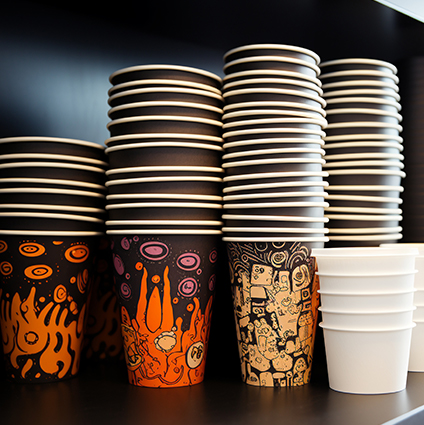
Hot drink cups usually use a single-wall or double-wall structure, with the coating chosen for the temperature range. Cold drink cups face condensation on the outside and ice and liquid on the inside, so their sizing and coating differ. Custom snack cups are smaller and often used for popcorn, fries, dried fruit, ice cream or party snacks, and they are popular as logo carriers because they are handled by guests at close range and photographed on party tables. A custom snack cup factory can print the brand mark on the outer wall, and the cup then works as a small piece of brand communication as well as a container.
The donut chart below shows how a first OEM cup briefing is commonly divided between topics. The weights are an illustrative planning model drawn from typical project conversations, not a published statistic, and they are meant to help a buyer prepare questions before contacting a factory.
The largest slice belongs to the coating and compost route, which matches the point made earlier: for a cup, the barrier decides both performance and the environmental claim. Print and logo placement comes second, and that is where brand teams usually feel most at home, but it depends on the coating decision, because the printed surface and the coated surface must work together. A buyer who prepares answers on the first two slices before contacting a paper cup factory will usually shorten the sampling phase.
The smaller slices still matter in daily use. A cup that does not fit the lid a customer already uses creates a problem at the counter, and a carton that is too large for the pallet plan creates a problem at the port. Asking these questions during the first briefing is a sign of a mature project, and it helps your OEM partner suggest sizes and packing formats that suit your distribution rather than only the factory's standard range.
Key takeaway: settle the coating and compost route first, then place the logo, and your cup project stays aligned from sample to shipment.
| Common OEM napkin choices and what each one changes in the finished product. | ||
| Choice | Options | What it changes |
| Ply count | One, two or three ply | Softness, strength and how well the print shows through |
| Fold style | Quarter fold, one-eighth fold, dispenser fold | Table presentation and dispenser compatibility |
| Print layout | All-over pattern, corner logo, border design | How visible the brand mark is once the napkin is folded |
| Size | Cocktail, luncheon, dinner | Fit with plates and cups in a matching set |
Party Napkin Manufacturer and OEM Paper Napkin: The Quiet Brand Carrier
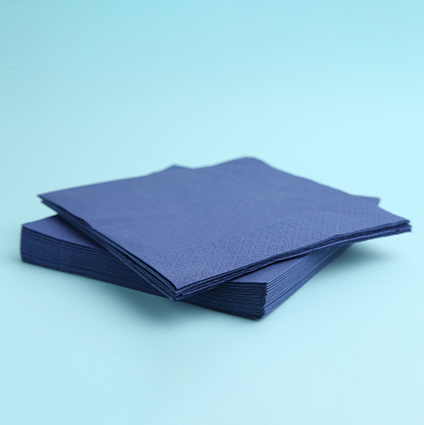
Napkins are often the lowest-profile item on a table, yet they are one of the most handled. A guest picks one up several times during a meal, which gives a printed napkin more brand contact than many people expect. A party napkin manufacturer can print a repeating pattern, a corner logo or a full-color festival design, and the choice depends on whether the napkin is meant to disappear into the setting or to act as a visible brand cue.
Several technical points shape an OEM paper napkin. Ply count and basis weight affect softness and strength, fold style affects how the napkin sits in a dispenser or on a plate, and the printing method affects how ink behaves on thin paper. Because napkins touch hands and mouths, ink choice and food-contact documentation deserve the same attention as they do on plates. A responsible party napkin factory will confirm these points before artwork is approved rather than after sample printing.
Matching napkins to the rest of the program is where an integrated supplier helps. If plates, cups and napkins come from different sources, colors drift between batches and the table looks assembled rather than designed. When one OEM partner prints all three, color references can be shared, and a single approval round covers the set.
Key takeaway: print napkins in the same program as plates and cups so the brand colors stay matched across the table.
Custom Party Goods and Gift Wrapping Paper Manufacturer: Building a Coordinated Program
Brands that sell party goods rarely sell a single item. A customer buying for a birthday or a holiday wants plates, cups, napkins and often gift wrap in one visual language. A gift wrapping paper manufacturer that also understands tableware can help a brand build that set with shared patterns and color references, which gives retail shelves a stronger and more recognizable look.
Gift wrapping paper has its own technical questions. Paper weight affects how well a roll folds around a box, print coverage affects how the pattern looks at a distance, and roll format affects how the product is displayed and shipped. A gift wrapping paper factory should be able to explain these points with sample rolls, and the brand can then decide whether the wrap is a premium seasonal item or an everyday companion to the tableware line.
The stacked bar chart below shows how a coordinated program might be divided between products across four seasons. The values are illustrative planning units for a mixed party goods range, not market statistics, and each row adds up to the same total so the mix can be compared from season to season.
The chart shows a simple idea: the product mix of a party program moves with the calendar. Plates keep a steady share in every season, cups gain weight in summer, and gift wrap grows sharply in winter. A brand that sees this pattern early can ask its OEM partner to schedule printing for the heavier products first and to place wrap production in the months before the holiday peak.
For a factory like ours, the pattern also supports cooperation across the year. When plates, cups, napkins and snack cups share a production calendar, color references and carton marks can be reused, and the brand avoids repeating approval steps for each item. This is one of the practical reasons wholesalers and retailers prefer a partner that covers several party goods categories, because the program stays visually consistent and the paperwork stays simple.
Compostable materials can also be threaded through the whole set. If the plates and cups follow a specific coating route, the napkins and wrap can be matched with compatible paper choices and plain, easily separated packaging. The brand then tells one clear story at the point of sale instead of a different story on each product, and customers can understand the message in a few seconds.
Key takeaway: a coordinated plates, cups, napkins and wrap program shares colors, calendars and cartons, which keeps the brand message consistent across seasons.
OEM Paper Plate Factory Sampling, Quality Checkpoints and Shipping Preparation
Sampling is where a project becomes real. A pre-production sample lets the brand see its logo on the actual structure, test the plate with real food, and compare the color with the approved reference. An OEM paper plate factory that encourages sampling, and treats feedback as a normal part of the process, usually produces smoother bulk orders, because the questions are answered before large quantities are printed.
What buyers can check on a sample
- Rim shape and flatness: the plate should sit level on a table and stack evenly without sticking.
- Load behavior: place a representative portion of your target food on the plate and observe whether the center flexes or the coating shows grease marks after a typical serving time.
- Print accuracy: compare logo position, edge sharpness and color against the approved proof under neutral light.
- Odor and surface: a clean smell and an even surface are basic signs of controlled production.
- Documentation match: confirm that the test reports and declarations refer to the structure you actually received.
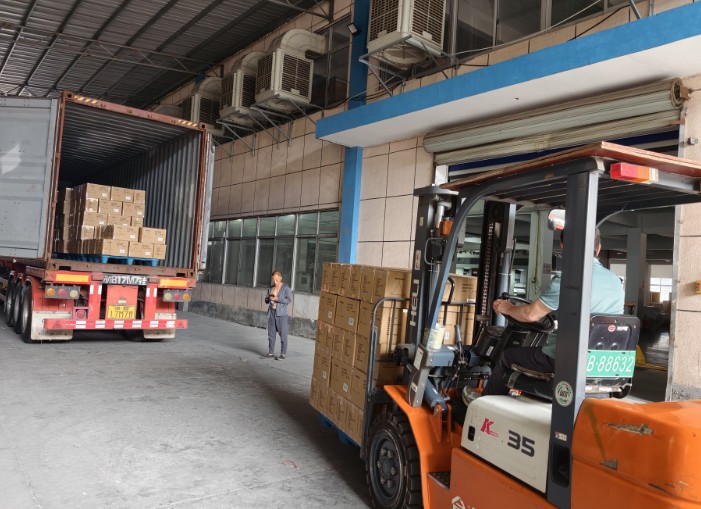
Shipping preparation deserves the same care. Paper products are light but bulky, and a poorly planned carton can waste container space or arrive crushed. Agree on carton size, inner pack count, pallet pattern and carton marks before bulk production starts, and keep the barcode and labeling requirements of your market in the same document. A factory located beside a major deep-water port can help here, because export documents, container booking and inland transport are handled close to the production site.
Seasonal timing is the last piece. Festival programs have a fixed date that cannot move, so working backward from the retail launch is the safest habit. Allow time for artwork approval, sampling, any needed test reports, bulk production and sea freight, and add a margin for the unexpected. Brands that share their launch date at the first meeting give the factory a chance to plan material purchasing and press time, which is one more way a cooperative partnership shows its value.
Key takeaway: sample with real food, agree on cartons early, and work backward from the retail launch date to keep festival orders on schedule.
Working Together: How B2B Partners Start an OEM Paper Tableware Project
Starting an OEM project does not require a finished design. Many partners begin with a short brief that states the product type, target market, intended use, logo files and preferred launch period, and the factory replies with structure options and sample suggestions. From there, both sides refine the details together, and each approval step narrows the project until it is ready for production.
The most helpful briefs include a few specific items. State the foods or drinks the product will hold, the compost or eco claim you hope to make, the markets where the goods will be sold, the printing style you prefer and the pack formats your distribution requires. If you already have compliance documents from a previous program, share them, because they help the factory understand what your market expects. If you do not, the factory can describe which documents are normally prepared for the product type and which ones depend on the final structure.
A cooperative relationship also leaves room for growth. A first program may cover plates and napkins for one festival, a second may add cups and snack cups, and a third may bring in gift wrap and a full private-label party range. Each step builds on the artwork files, color references and approval records from the one before, so later projects move faster. For brand owners, wholesalers and distributors, this is the practical meaning of win-win cooperation with a factory partner: both sides save time as the relationship matures.
Key takeaway: start with a short, specific brief, and let each program build on the files and approvals of the last one.
FAQ: Compostable Materials and OEM Paper Plate Manufacturing
Q1. What should I ask an OEM paper plate manufacturer about compostable materials?
Ask which layers the plate contains, which coating route is used, which composting environment the claim refers to, and which test report matches your exact product. Also ask how the printed ink affects the claim, because artwork and coating work together.
Q2. Can a custom paper plate factory print my brand logo on festival designs?
Yes, logo and festival artwork printing is a normal part of OEM service. Share vector files and color references, and the factory will check bleed areas, ink choices and print layout before preparing a sample for your approval.
Q3. Do you supply paper cups, snack cups, party napkins and gift wrapping paper as well as plates?
Ningbo Kosda works with paper tableware and related party goods, and brands often combine several items in one program so colors and cartons stay consistent. Send your product list and target markets, and our team can discuss which items fit your project.
Q4. How should a brand prepare before contacting an OEM paper plate manufacturer?
Prepare a short brief with product types, sizes, intended foods, target markets, logo files, desired compost or eco claim and launch period. A clear brief shortens the sampling phase and helps the factory suggest suitable structures from the first reply.
Your email address will not be published. Required fields are marked *
-
Modern Green And Environmentally Friendly Paper Product Manufacturer
-
Quick Links
Home About Us Products News Contact Us -
Product Categories
Paper Plates Paper Cup Paper Napkin Paper Food Container Disposable Paper Tablecloth Wrapping Paper Roll Paper Cutlery -
Contact Us
 Tel: +86-13967818265
0086-13646629749 E-mail: [email protected]
E-mail: [email protected]
E-mail: [email protected]
 Whatsapp: 008613646629749
 Add: 1036 Cidong Avenue, Binhai Economic Development Zone, Ningbo City, Zhejiang Province, China
